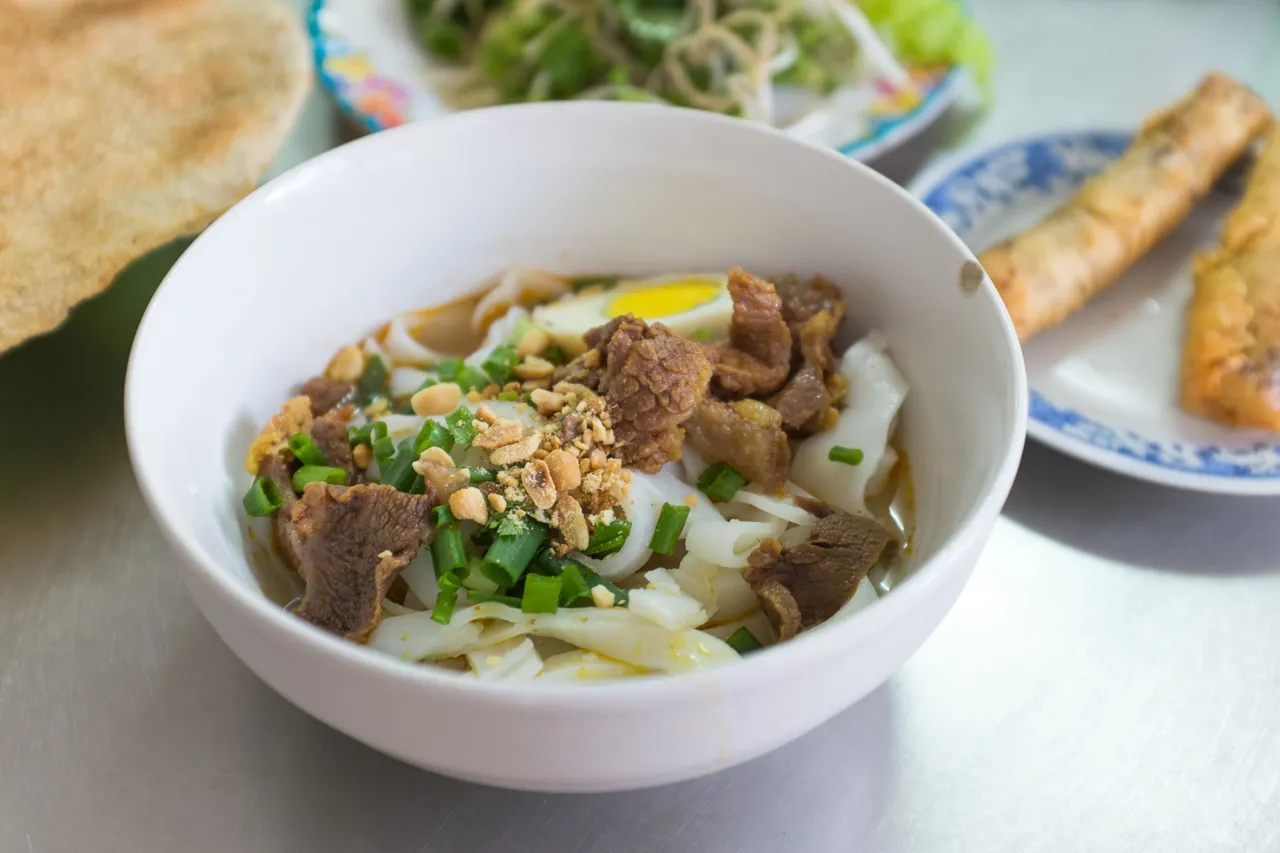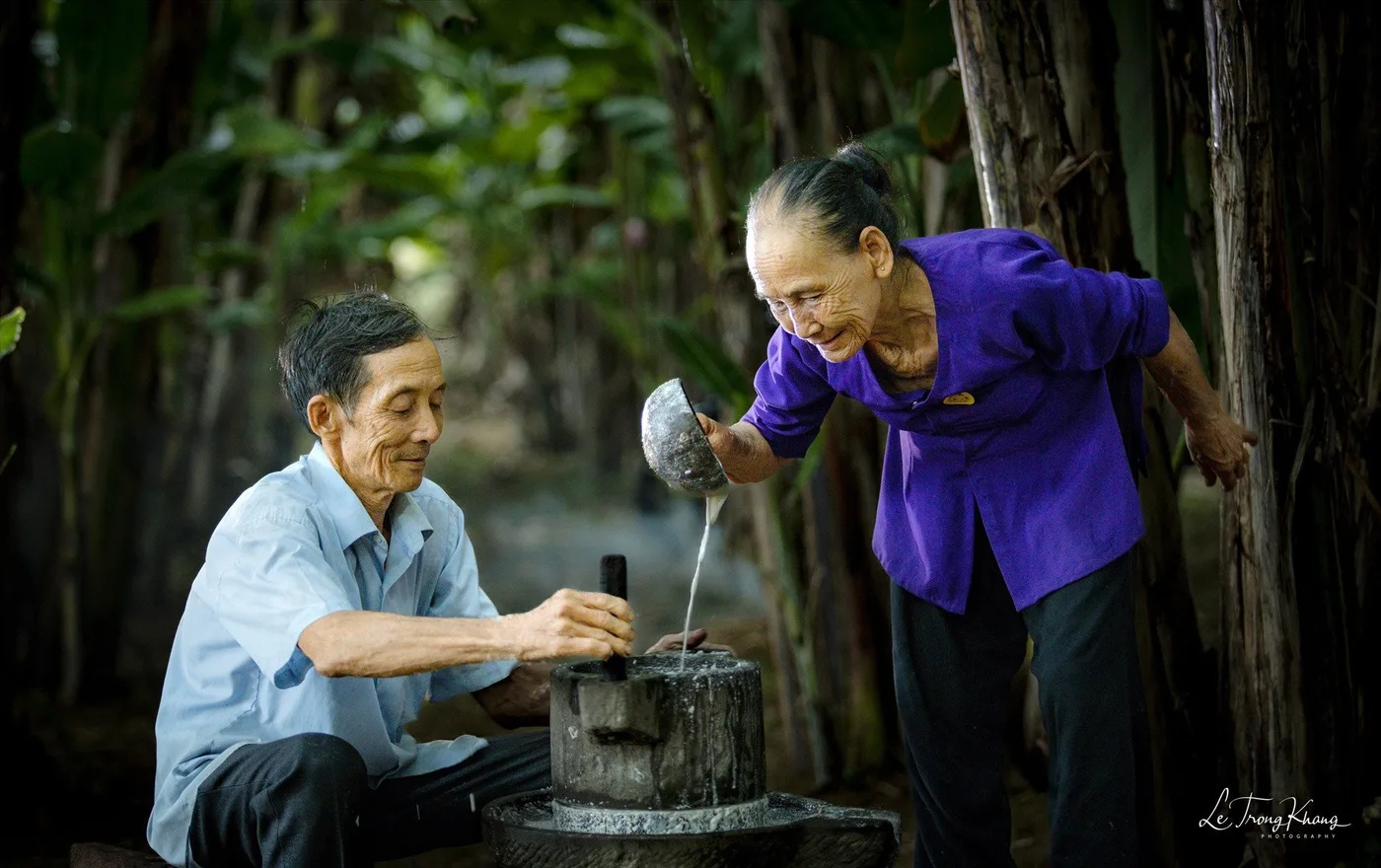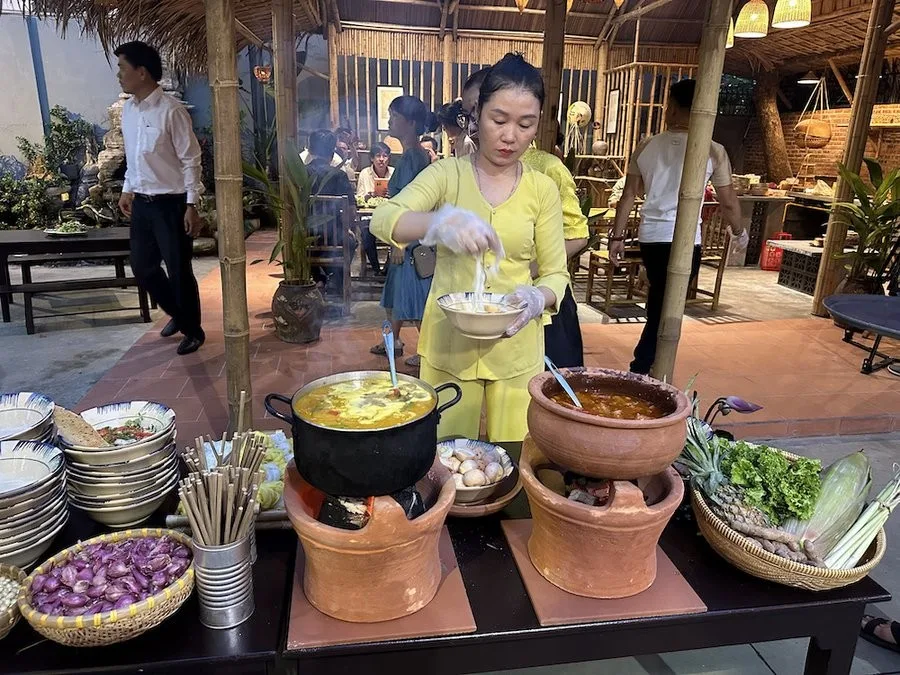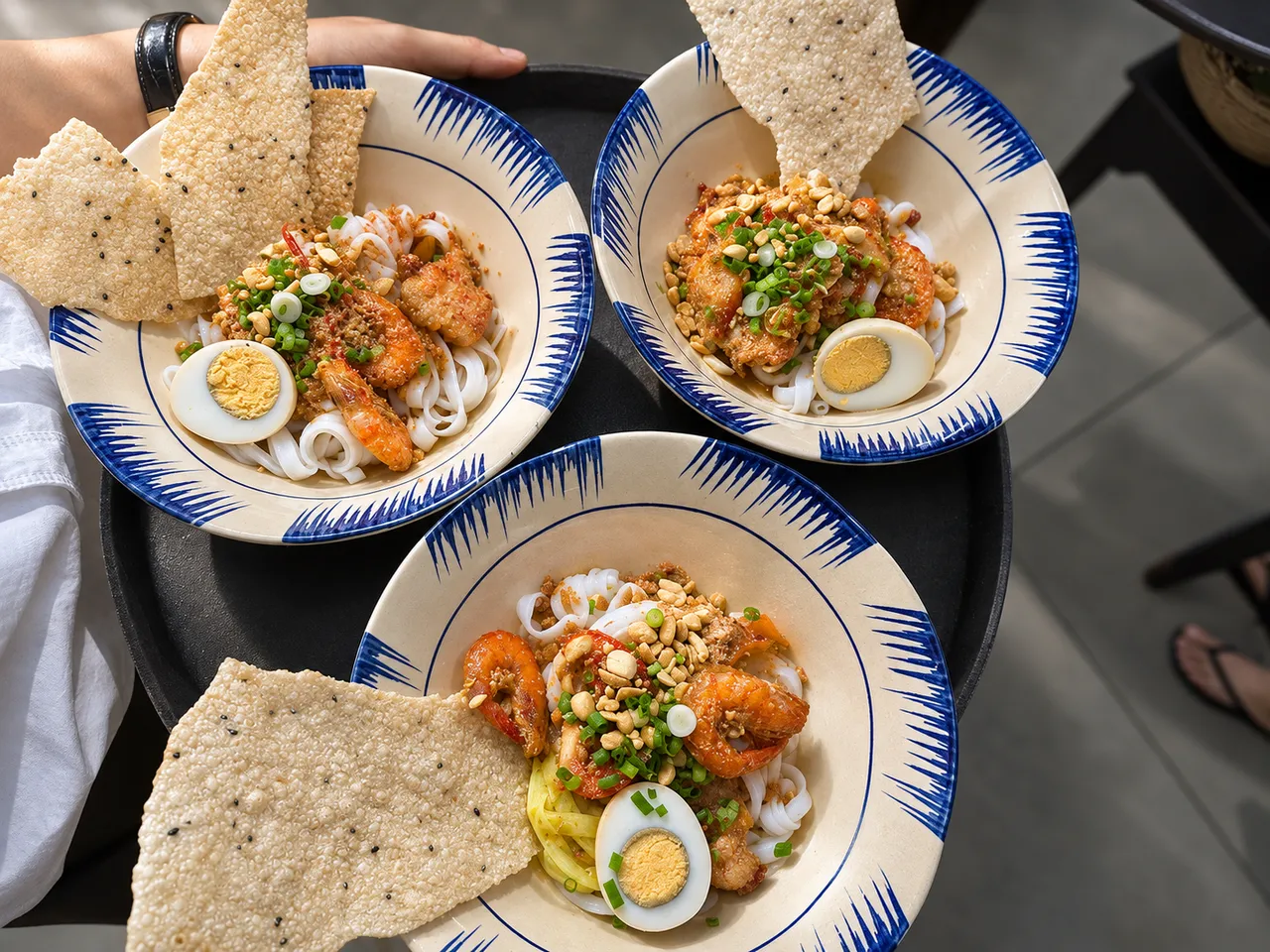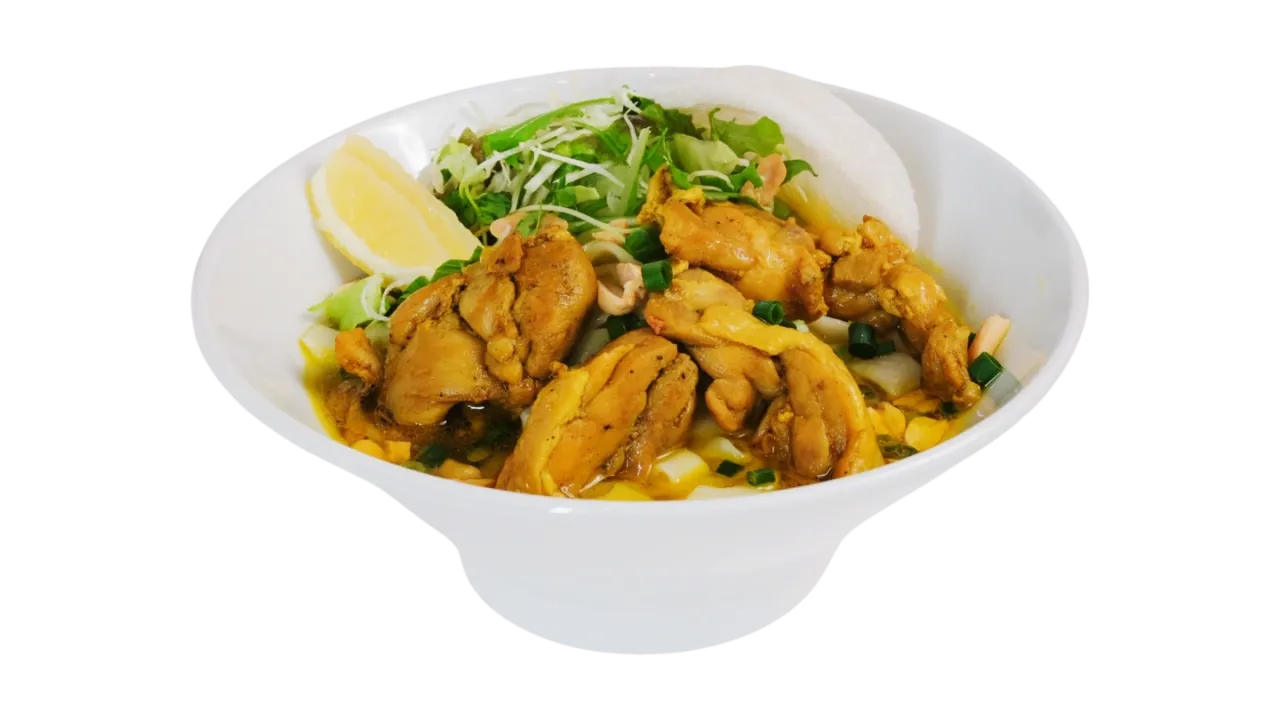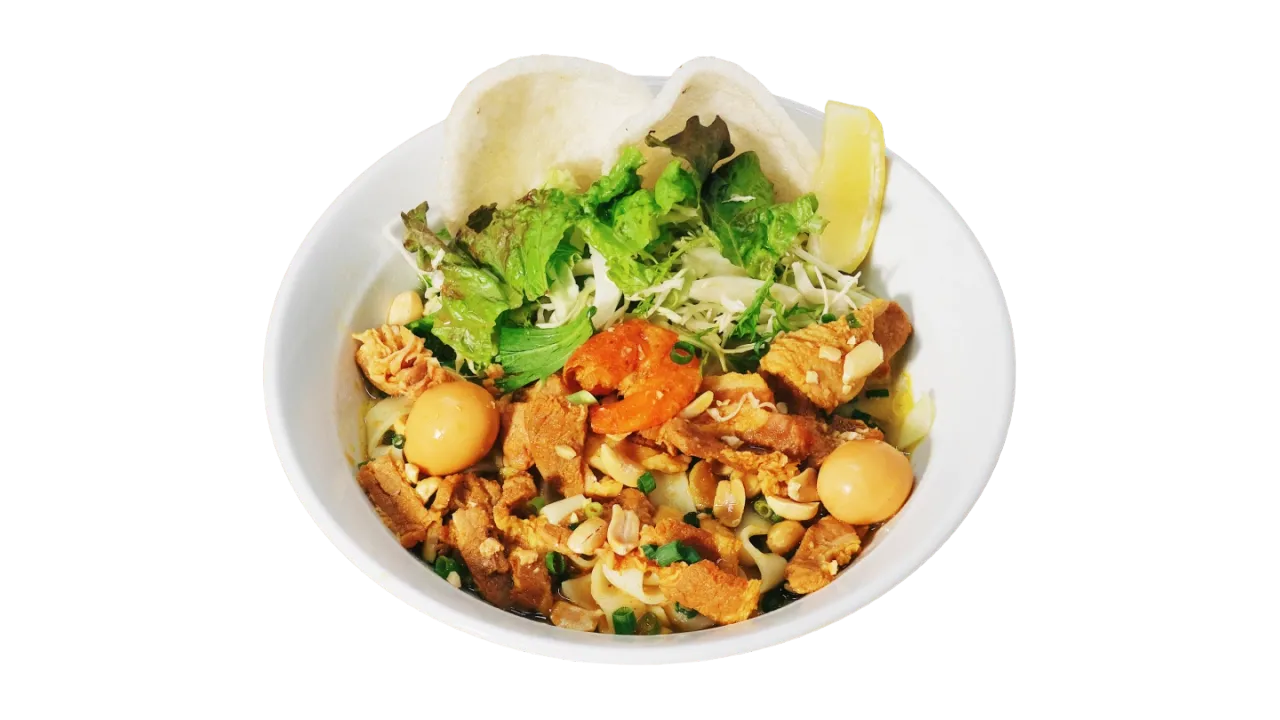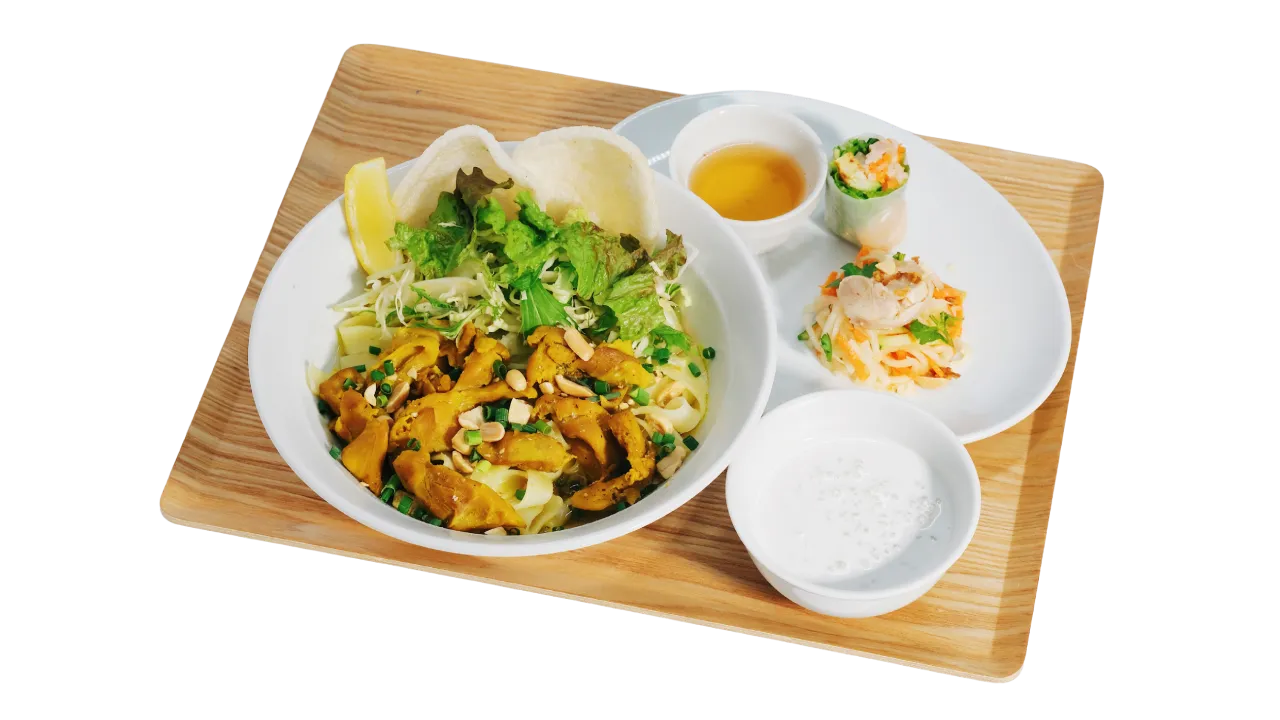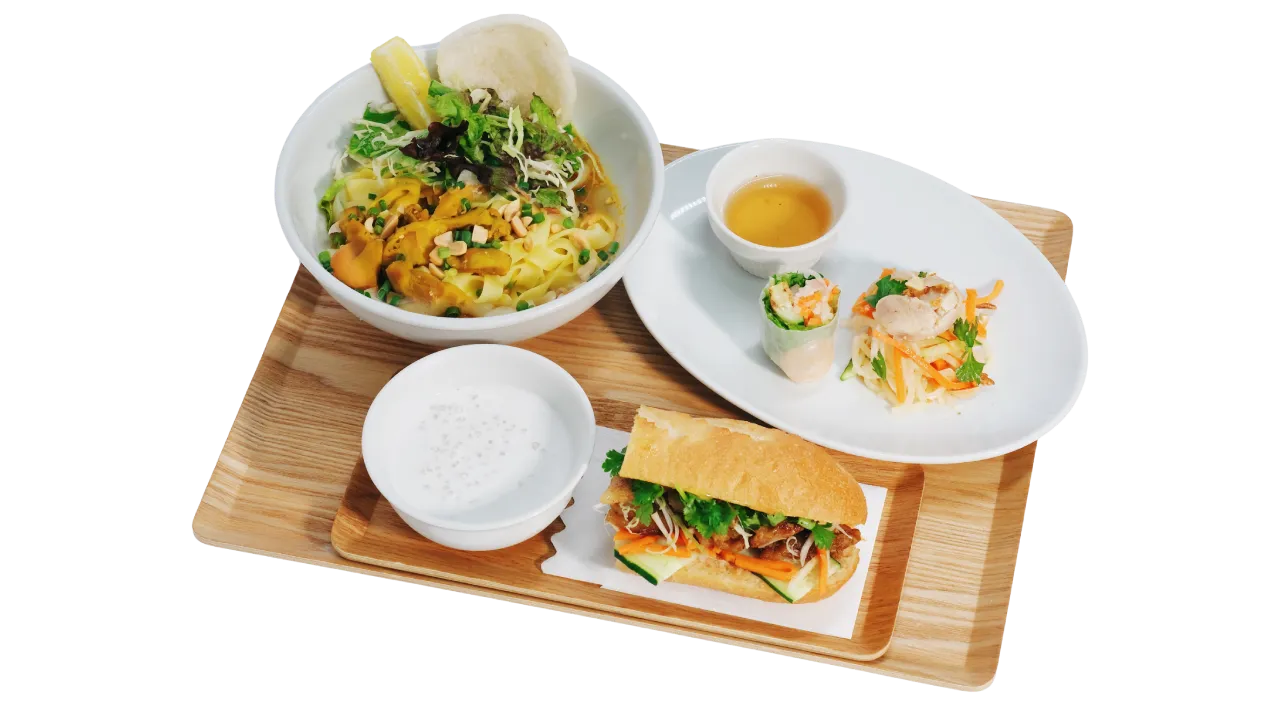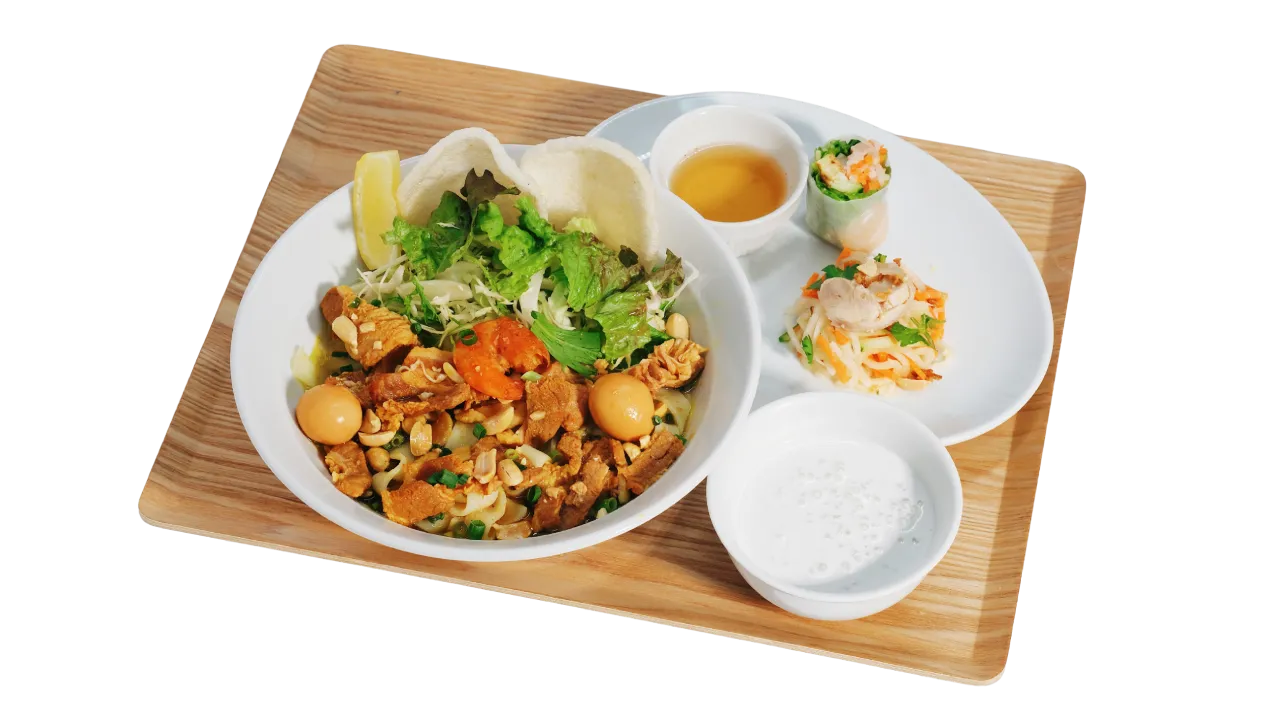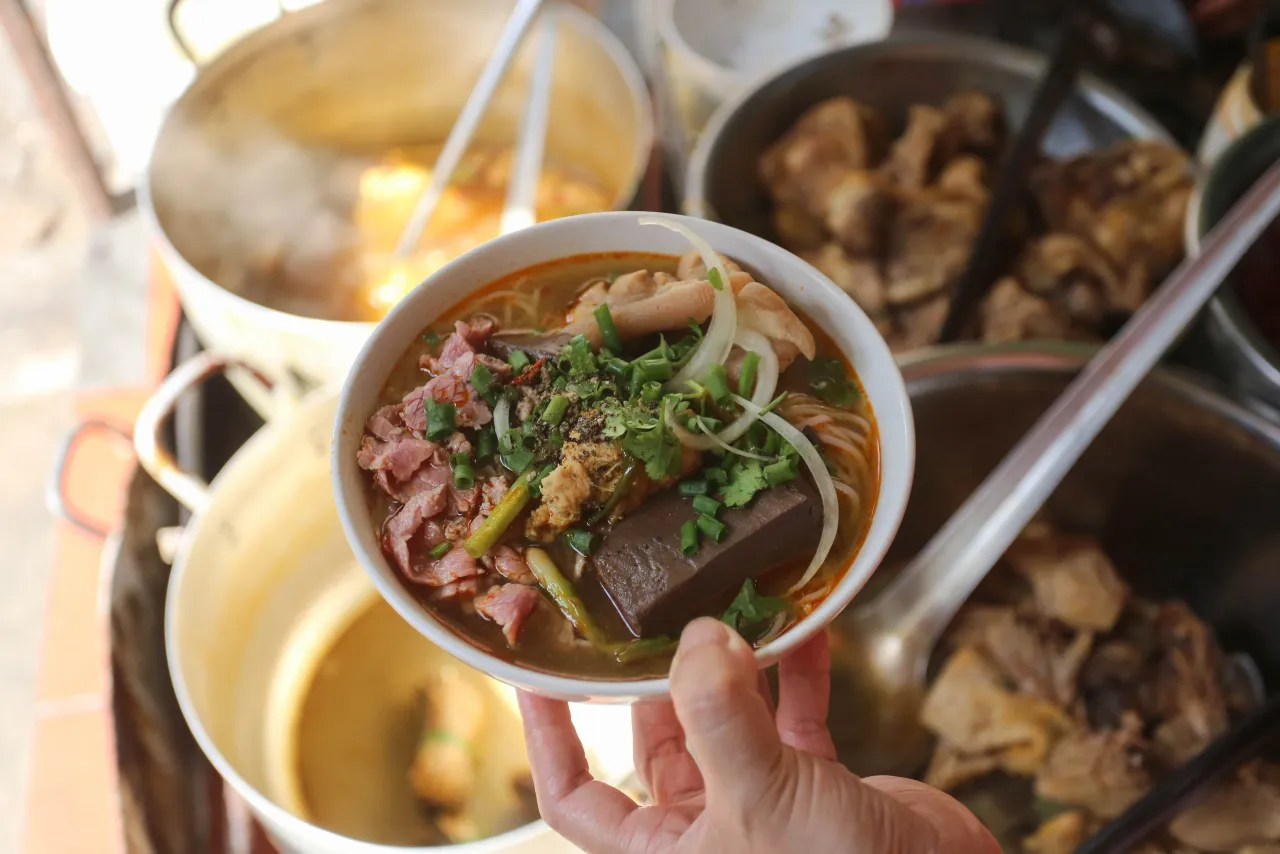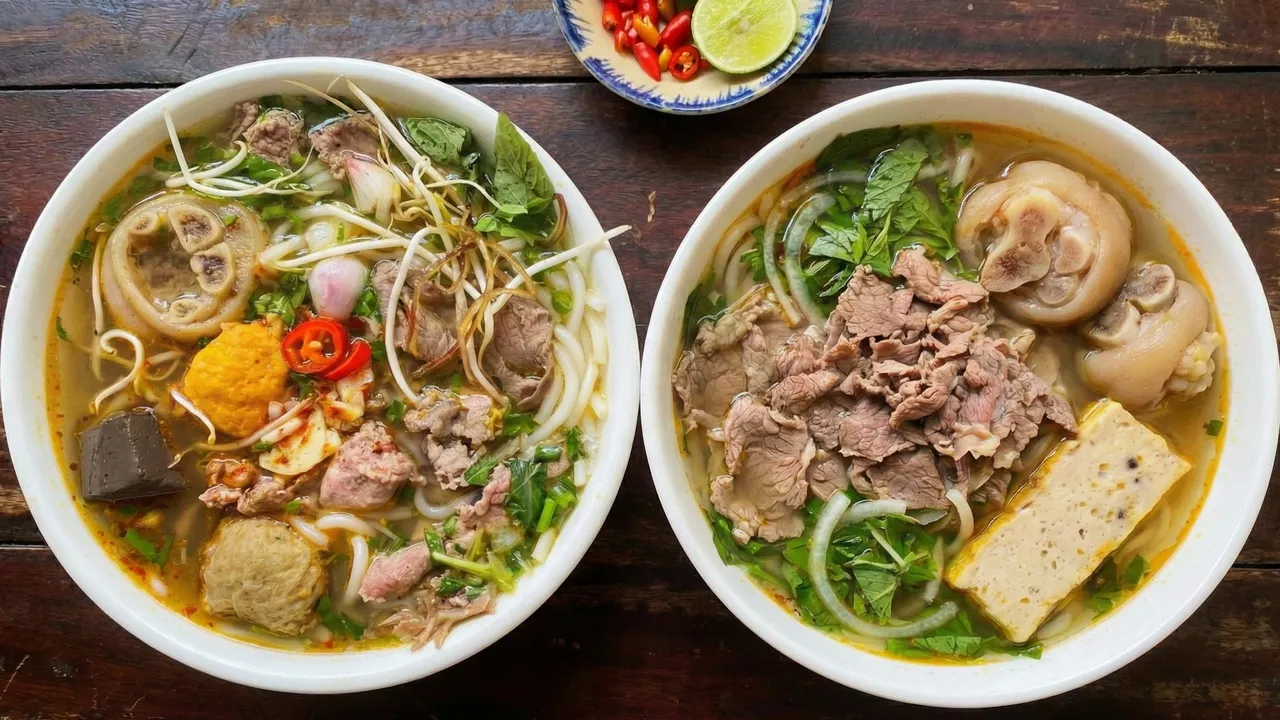
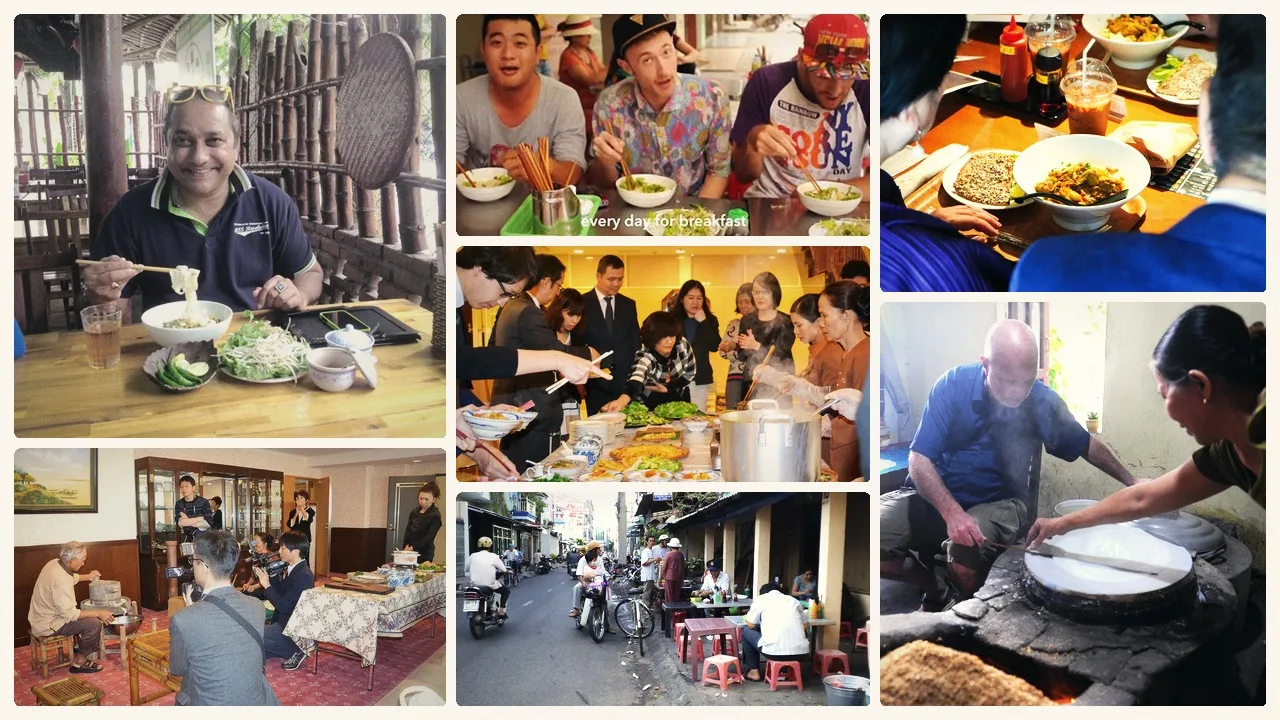
When a regional dish travels beyond its home villages, seeing mì Quảng through international and Japanese eyes often reveals nuances that locals take for granted. Across present-day Da Nang city, Western visitors marvel at its "half soup, half salad" structure, while Japanese diners immediately recognize a comforting kinship with flat kishimen noodles.
In Episode 5, join Bánh Mì Xin Chào as we read firsthand accounts from foreign travel writers, contemporary Vietnamese chefs, and Japanese food media discovering mì Quảng.
"A gymnasium for your teeth and tongue" and a half-soup, half-salad bowl
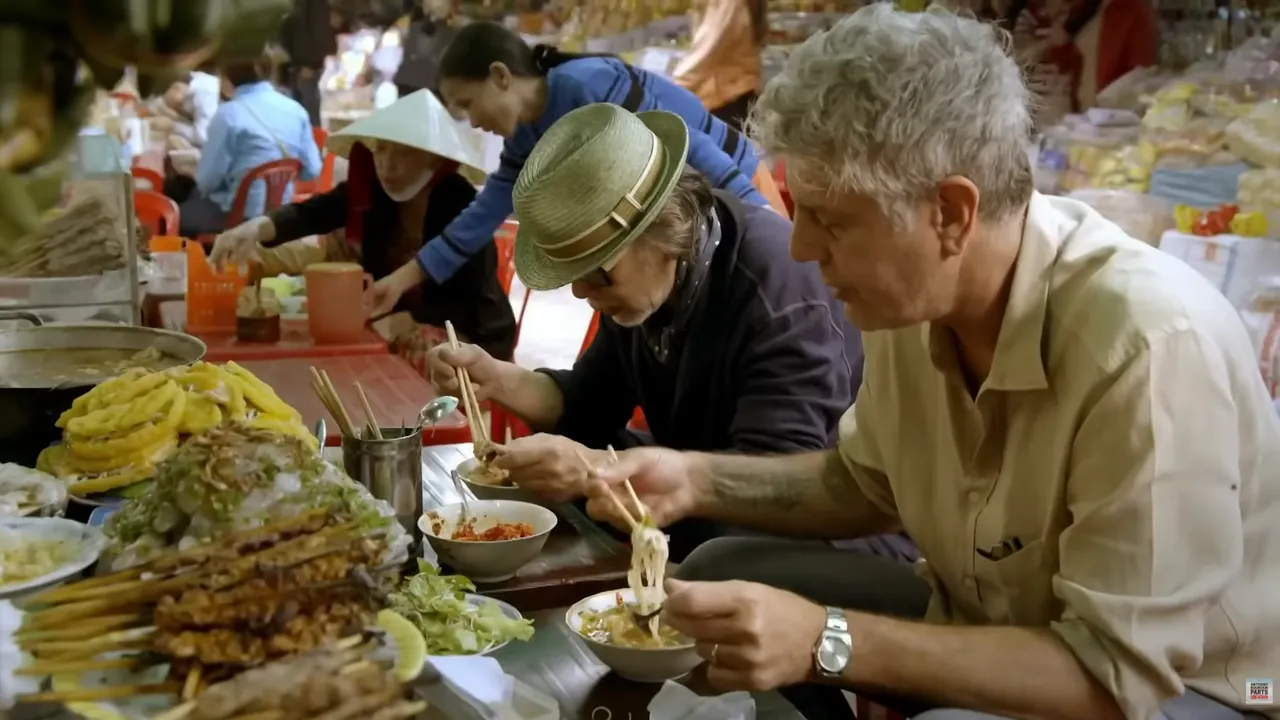
For Western travelers accustomed to associating Vietnamese noodles with brimming bowls of steaming pho broth, a first encounter with mì Quảng is a delightful surprise. Independent travel writer Tom Divers of Vietnam Coracle observed that the dish quickly becomes a favorite among expats living in Vietnam thanks to its thick ribbons and shallow broth [1].
Describing a mouthful combining rice crackers, peanuts, herbs, and braised toppings, he coined a memorable phrase:
Texture-wise it's got everything: a gymnasium for your teeth and tongue, crunchy, chewy, crispy, slippery, slimy [1].
Also writing for Vietnam Coracle, researcher Luke Digweed contrasted the two signature noodle bowls of the Hoi An area (now Hoi An ward in Da Nang city). Whereas rich, thick-noodled cao lau with barbecued pork remains exclusive to Quang Nam and the old port town, mì Quảng is the everyday staple across central Vietnam, lighter on the palate and endlessly adaptable [2].
From a practical travel perspective, writer Jodi Ettenberg of Legal Nomads, who has celiac disease, named mì Quảng among her favorite meals in Vietnam. She explained to Western readers that despite the word mì often implying wheat, traditional hometown mì Quảng ribbons are steamed from rice flour, making the dish naturally gluten-free [3].
Venture into quieter corners of the internet from over a decade ago and you also find heartfelt diaries by long-term expats who fell in love with central Vietnam's morning sidewalk culture. In July 2012, on the personal blog Down The Street and Back Again, an expat pilot chronicling "365 Food Experiences One Bite at a Time Here in Vietnam" dedicated entry number 200 to a 6:30 a.m. bowl of pork-rib mì Quảng [13]. Pulling his rented motorbike up to a crowded sidewalk stall, he described sitting on a tiny red plastic stool with his "knees pressed up to my chin" to savor a morning bowl costing under one US dollar and fragrant with roasted peanuts [13].
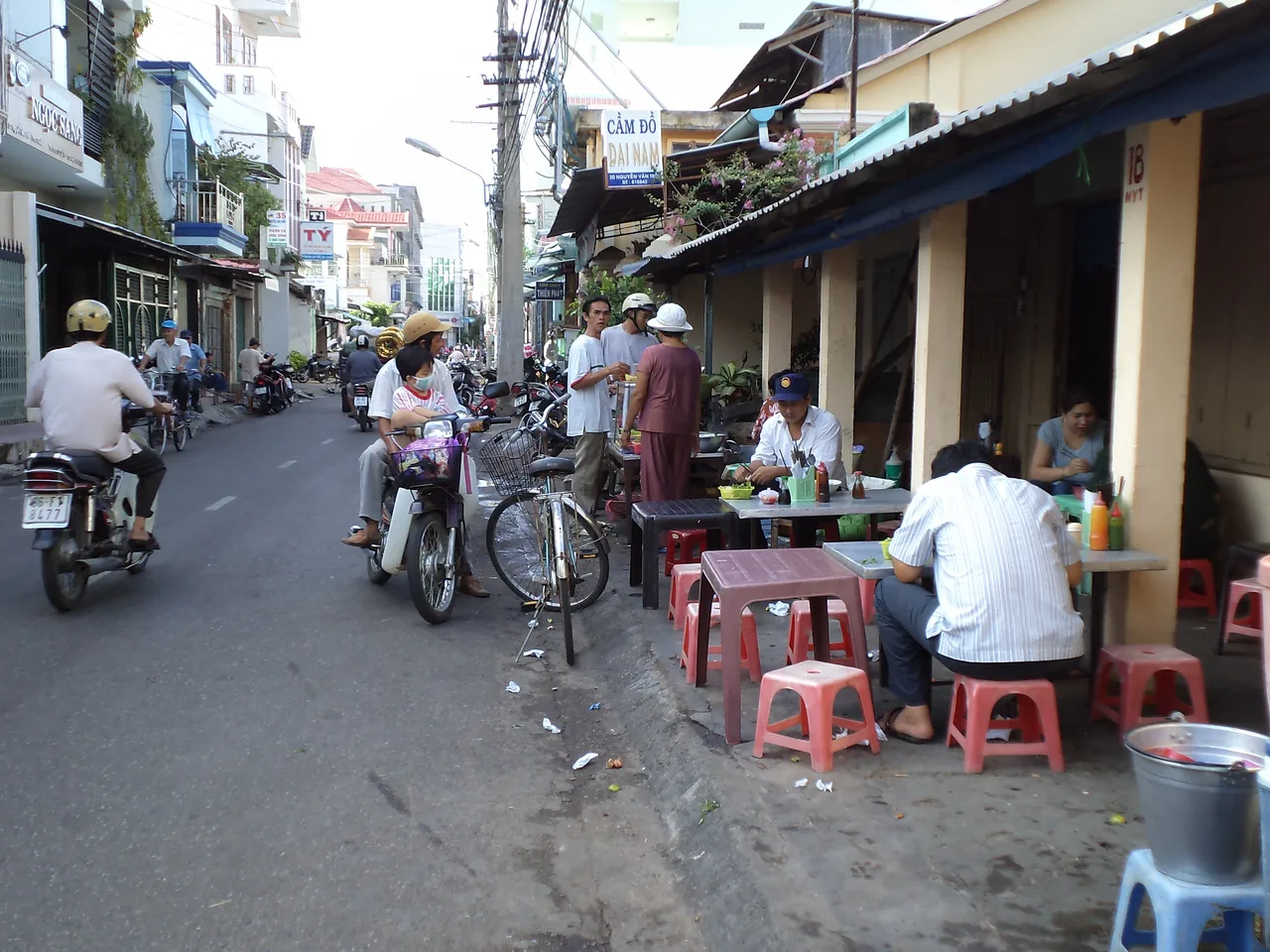
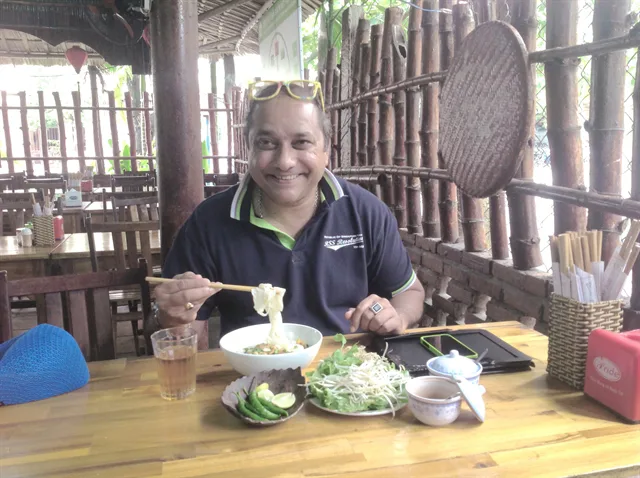
Sharing that fondness for unpretentious neighborhood shops beyond tourist lanes, Australian writer Mark Bowyer, who first visited Vietnam in 1991 and founded the independent travel guide Rusty Compass, urges visitors to step outside Hoi An's crowded Old Town onto residential streets like Thai Phien and Tran Cao Van, where modest family stalls such as Quan Nam Bao serve mì Quảng all day to local neighbors [14]. Meanwhile in Da Nang, a feature in Viet Nam News profiled Singaporean businessman Aamir Ahmad Mohamad, who has enjoyed handmade Phu Chiem mì Quảng at least twice a week since 2008 [15].
Among contemporary Vietnamese chefs, Da Nang chef Summer Le described mì Quảng to Vietcetera as "half noodle soup and half noodle salad". Though it looks simple at first glance, balancing the concentrated sauce and fresh greens requires the practiced touch of a mother's home kitchen [4]. Saigoneer similarly portrayed the dish as a multi-branched family tree spreading from Hoi An port across regions [5], while overseas Vietnamese food blogs such as The Ravenous Couple keep the tradition alive in diaspora kitchens [6].
When Western expats in Da Nang wrote "The Mì Quảng Song"
Beyond travel essays, affection for central Vietnam's morning bowl even inspired its own lighthearted anthem. In September 2014, Western expats Jake Schofield and Ashlin Aronin living in Da Nang teamed up with local collaborator Phan Ngoc Hao to release a pop-rap music video titled The Mì Quảng Song, dedicated as "an ode to the most delicious noodles in the world" [11] [12].
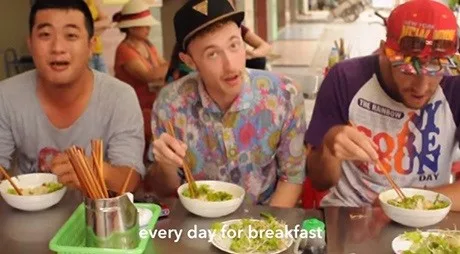
Filmed around Phuoc My Market and neighborhood stalls in Da Nang, the upbeat track blends English rap verses with everyday Vietnamese lines like "Đi ăn sáng phải là mì Quảng ở chợ Phước Mỹ" ("For breakfast it has to be mì Quảng at Phuoc My Market") [12]. The lyrics playfully capture the daily ritual of ordering a morning bowl:
Let me get một tô mì Quảng, yo, and extra quail egg to make me strong...
Super magic flavor only 15 đồng, how many foods got their own song? [11]
From asking the vendor for extra quail eggs and marveling at fish sauce and broth ladled over fresh herbs ("the way she put them on that rau") to celebrating a 15,000-dong breakfast (in 2014 prices) worthy of its own song, the video drew over 50,000 views within four days [11] [12]. As Dan Tri Newspaper reported, while young central Vietnamese viewers loved seeing foreigners rap about their hometown specialty, a playful food-fight scene at the end sparked a brief discussion on table etiquette, prompting creator Ashlin Aronin to explain warmly that the silliness came purely from genuine love for the dish [12].
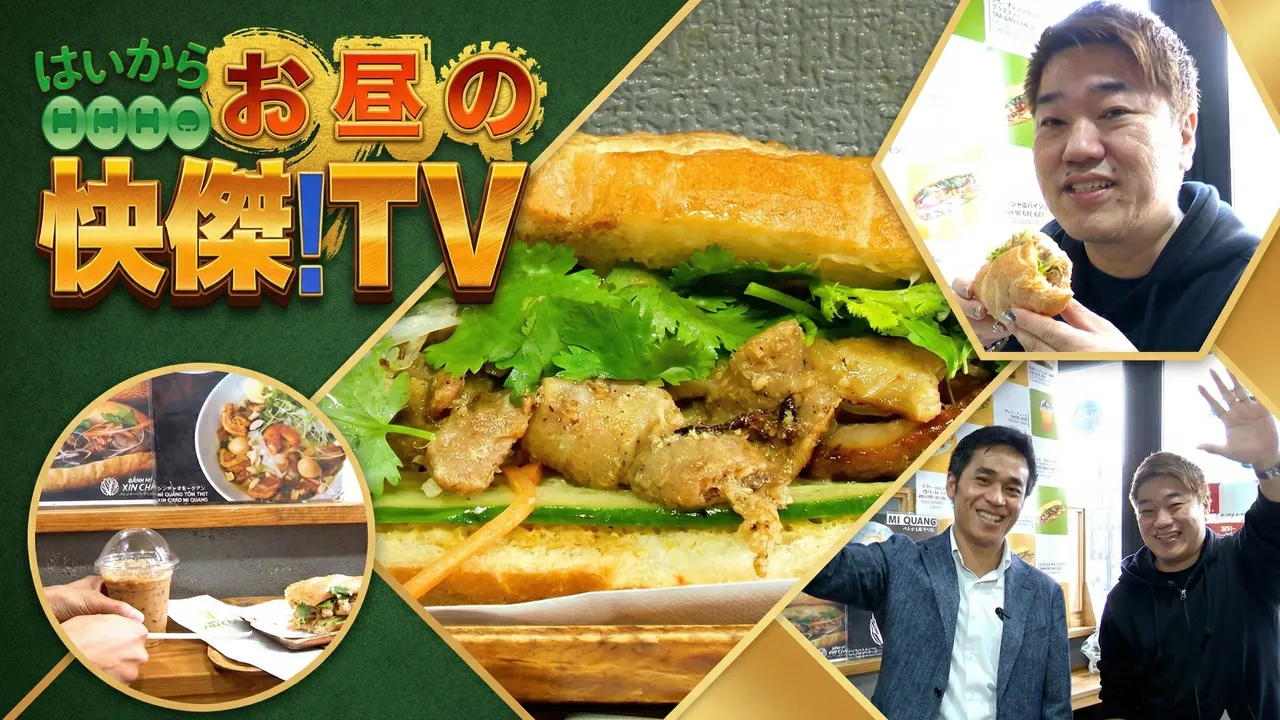
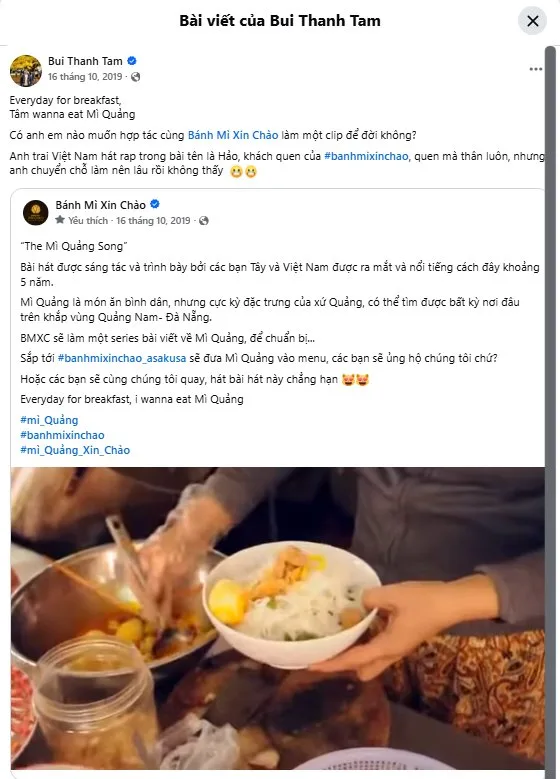
Years later, that lighthearted anthem unexpectedly formed a personal bridge to Bánh Mì Xin Chào's own story in Japan. In October 2019, just before introducing mì Quảng onto the menu for the very first time at its Asakusa store in Tokyo, Bánh Mì Xin Chào shared The Mì Quảng Song on its social page alongside a promise to create a dedicated blog series exploring the dish, a promise fulfilled in the very series you are reading today. Co-founder Bui Thanh Tam also recalled a heartwarming coincidence: Phan Ngoc Hao, the Vietnamese friend rapping alongside the two Western expats in the 2014 video, had actually been a close regular guest at Bánh Mì Xin Chào during its early days in Japan before moving to a new workplace.
Why Japanese diners see a kinship with kishimen and mazesoba
While Western diners focus on contrasting textures, Japanese visitors meeting mì Quảng often smile with immediate recognition. Coming from a deep noodle culture of their own, Japanese food editors quickly found evocative parallels:
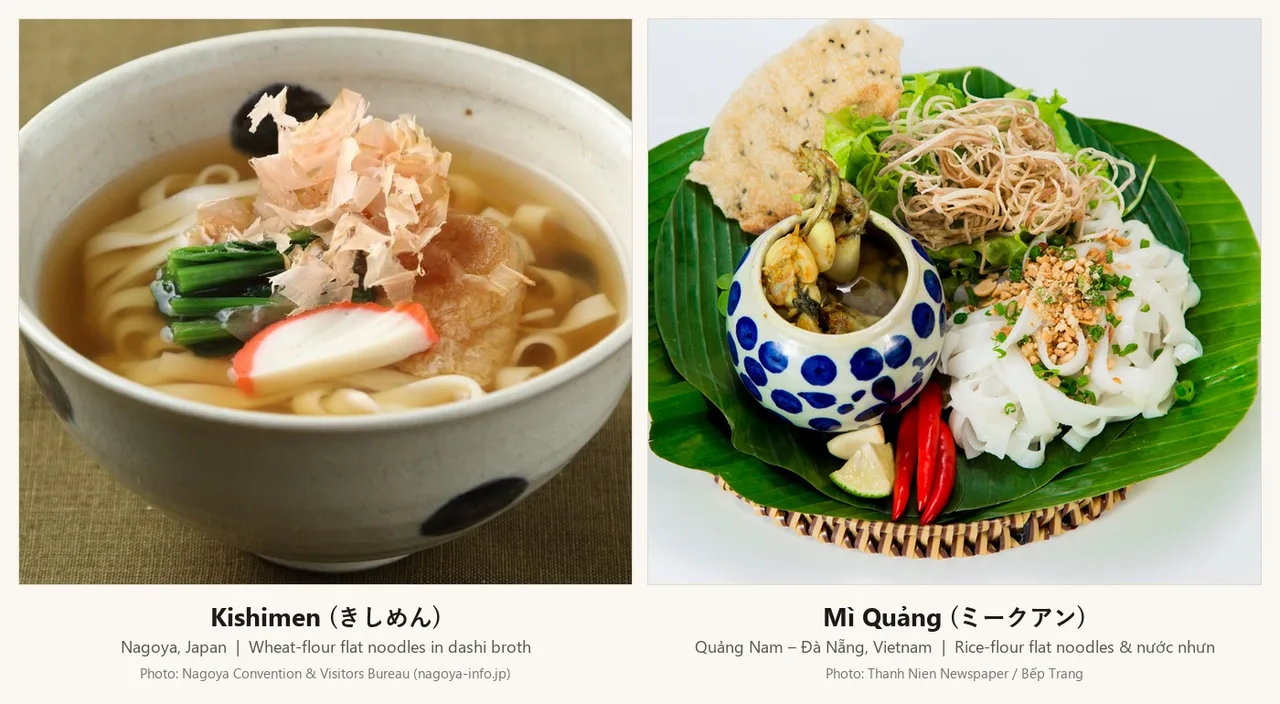
- Flat ribbon rhythm like kishimen and mazesoba: Writer yuya on Japanese travel magazine TRIPPING! likened mì Quảng directly to mixed mazesoba (混ぜそば), noting that its wide ribbons share the supple, fluttering mouthfeel (piropiro / ピロピロ) and gentle chew of Nagoya's flat kishimen (きしめん), paired with a mild curry-like spice note [7].
- Peanuts, crisp rice crackers, and concentrated broth: Japanese-resident guide Vetter also compared mì Quảng to kishimen tossed in rich chicken, pork, and seafood broth with fragrant peanuts and crispy sesame rice crackers (bánh tráng), while in the same Da Nang and Hoi An food guide noting the local lore linking Hoi An's cao lầu noodles with Ise udon (伊勢うどん) from Mie Prefecture [8].
- A "semi-brothless" (han-shirunashi) style: Japanese lifestyle portal POSTE explained that while Mì on Vietnamese menus usually denotes wheat noodles, central Vietnam's mì Quảng features wide rice-flour strands topped with banana blossom, herbs, peanuts, and sesame rice crackers in a "half-brothless" (半汁なし麺) format rather than a deep noodle soup [9].
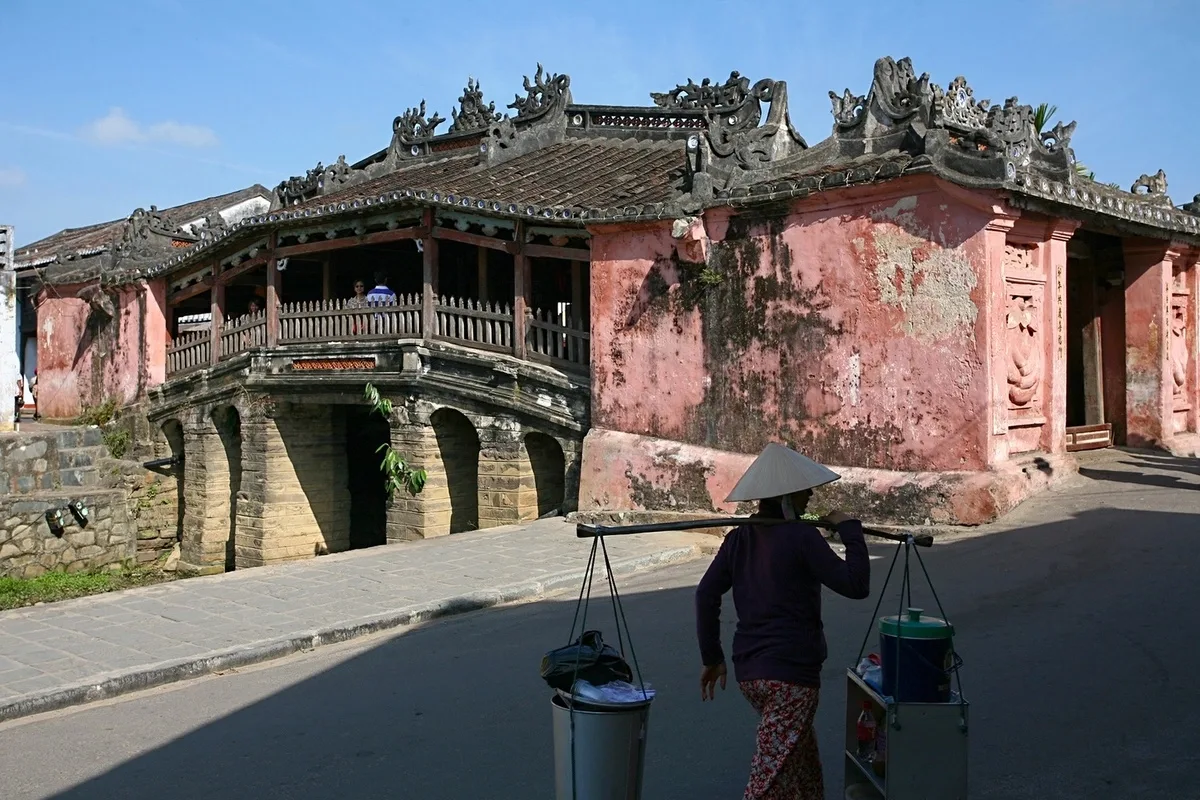
This affinity at the table echoes a roughly four-century bond anchored by Hoi An's iconic Japanese Covered Bridge. According to official Nagasaki Prefectural records, Red Seal Ships (Shuinsen / 朱印船) sailed from Nagasaki to Hoi An port and helped establish a thriving Japanese town; merchant Araki Sotaro (荒木宗太郎) married Vietnamese Princess Anio (アニオー姫), and locals in Nagasaki still reenact their Red Seal Ship procession every seven years at the autumn Nagasaki Kunchi festival [10].

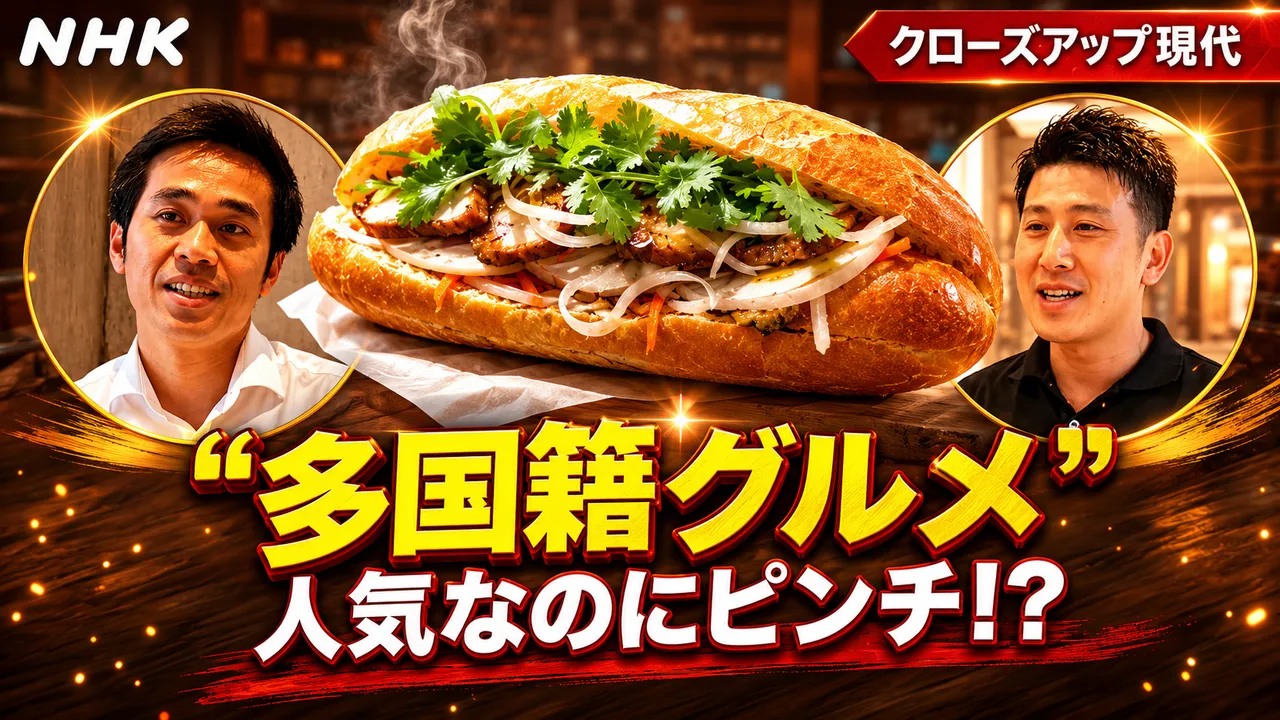
Remarkably, that comparison between mì Quảng and kishimen goes beyond travel writing; it inspired a creative culinary bridge inside our own kitchens at Bánh Mì Xin Chào in Japan. Join us in Episode 6, our series finale, for that behind-the-scenes story.
References
- Tom Divers (2017, April 1). Mì Quảng 85 Noodle House, Saigon. Vietnam Coracle.https://www.vietnamcoracle.com/mi-quang-85-noodle-house-saigon/
- Luke Digweed (2024, May 1). Hoi An Food Guide. Vietnam Coracle.https://www.vietnamcoracle.com/hoi-an-food-guide/
- Jodi Ettenberg (2018, April 2). My Essential Gluten Free Guide to Vietnam. Legal Nomads.https://www.legalnomads.com/gluten-free/vietnam/
- Travis Hodges (2018, December 12). Danang Food Guide: Summer Le's Favorite Breakfast, Lunch, And Dinner Places.https://vietcetera.com/en/danang-food-guide-summer-les-favorite-breakfast-lunch-and-dinner-places
- Thu Hà (2026, April 16). An Homage to Mỳ Quảng and Its Branching Family Tree Across Vietnam.https://saigoneer.com/snack-attack/28898-an-homage-to-m%E1%BB%B3-qu%E1%BA%A3ng-and-its-branching-family-tree-across-vietnam
- Cuong & Sandy (2009, June 2). Mi Quang (Vietnamese Tumeric Noodles from Quang Nam). The Ravenous Couple.https://theravenouscouple.com/2009/06/mi-quang-vietnamese-tumeric-noodles-from-quang-nam.html
- yuya (2017, April 24). ベトナム・ダナン名物「ミークワン」の名店へ.https://tripping.jp/asean/vietnam/danang/54065
- Weekly Vetter Editorial (2025, December 8). 【ダナン&ホイアン】絶対に食べたい!地元グルメと名物料理を紹介!.https://wkvetter.com/?p=107709
- POSTE Editorial (2022, September 22). ベトナムの麺料理11選|フォー・ブン・ミークアンなど種類と特徴を解説.https://poste-vn.com/lifetips/vietnamese-noodle-923
- Nagasaki Prefectural Government (2017, June 5). ベトナム社会主義共和国 クァンナム省. 長崎県公式ホームページ.https://www.pref.nagasaki.jp/bunrui/kanko-kyoiku-bunka/kokusaikoryu-passport/kokusaikoryu/sistercities/quangnam/
- Jake Schofield, Phan Ngọc Hảo, & Ashlin Aronin (2014, September 15). The Mì Quảng Song [Video].https://www.youtube.com/watch?v=9vTUnLZgGgc
- M.C (2014, September 20). Bài hát vui nhộn về món mì Quảng của nhóm bạn Tây sáng tác. Báo Dân Trí.https://dantri.com.vn/nhip-song-tre/bai-hat-vui-nhon-ve-mon-mi-quang-cua-nhom-ban-tay-sang-tac-1411723698.htm
- SGNPilot (2012, July 3). Mi Quang (Quang Noodle Soup) (200 of 365). Down The Street and Back Again.https://offthetouristtrail.wordpress.com/2012/07/03/mi-quang-quang-noodle-soup-200-of-365/
- Mark Bowyer (2018, March 20). Streets of food - best streets for foodies in Hoi An. Rusty Compass.https://www.rustycompass.com/vietnam-travel-guide-233/hoi-an-28/eating-16/streets-of-food-best-streets-for-foodies-in-hoi-an-1458
- Công Thành (2019, May 26). Handmade mỳ Quảng noodles keep Phú Chiêm going strong. Việt Nam News.https://vietnamnews.vn/sunday/features/520445/handmade-my-quang-noodles-keep-phu-chiem-going-strong.html