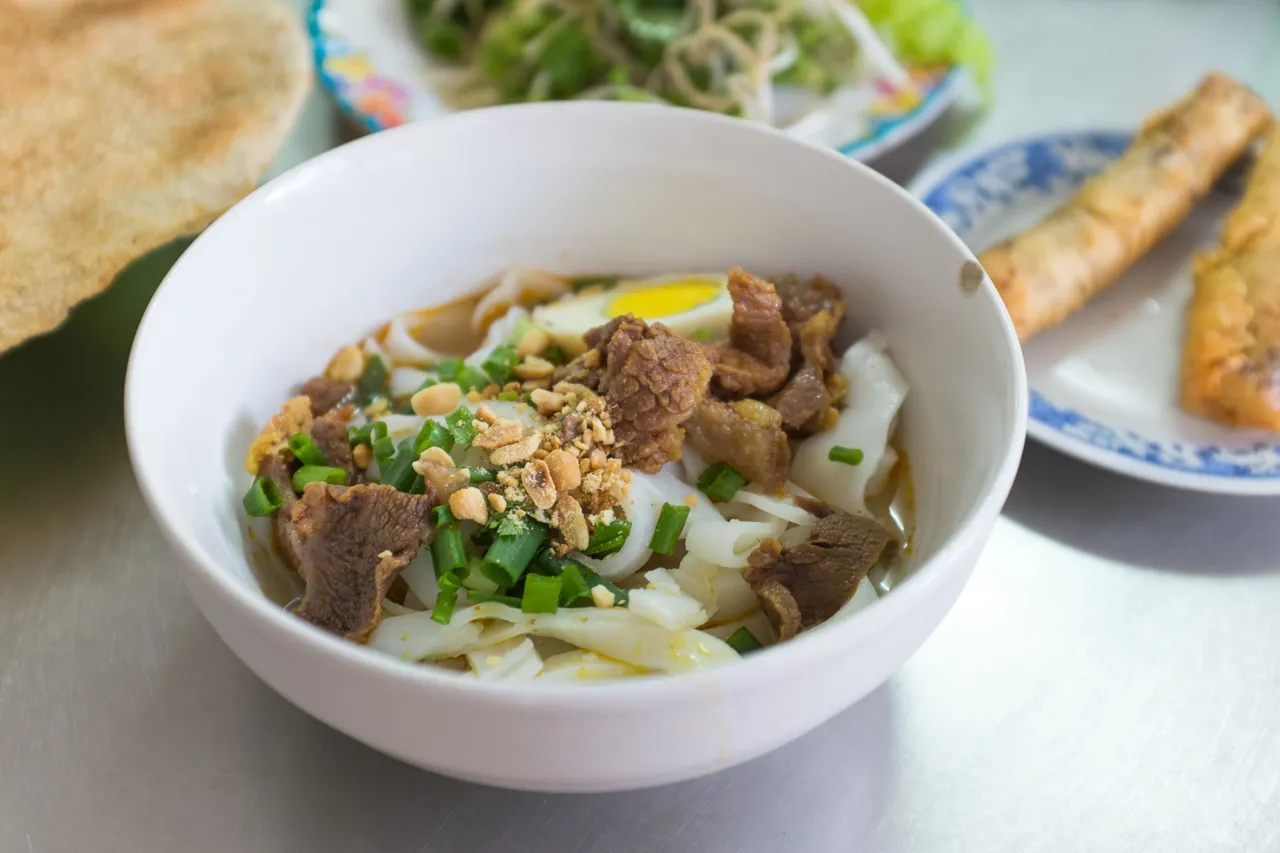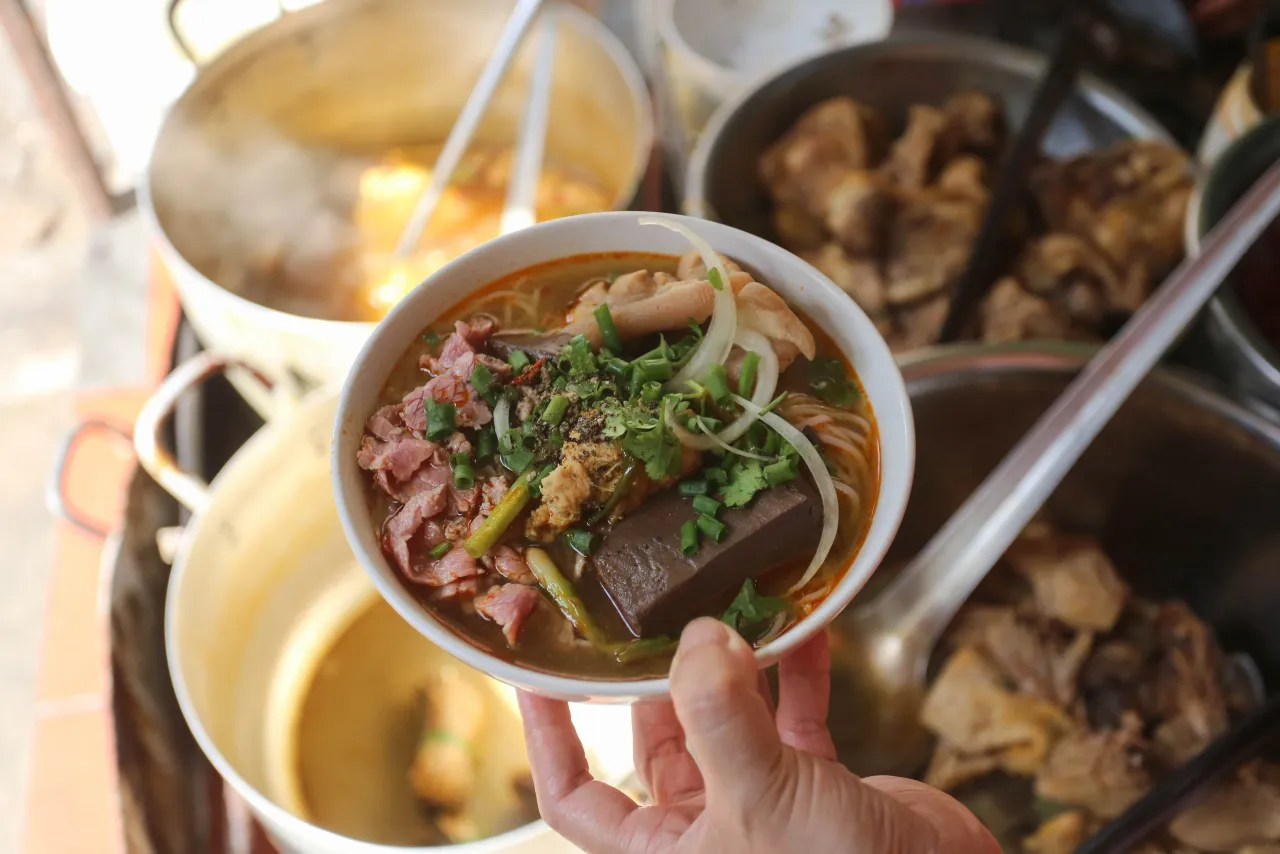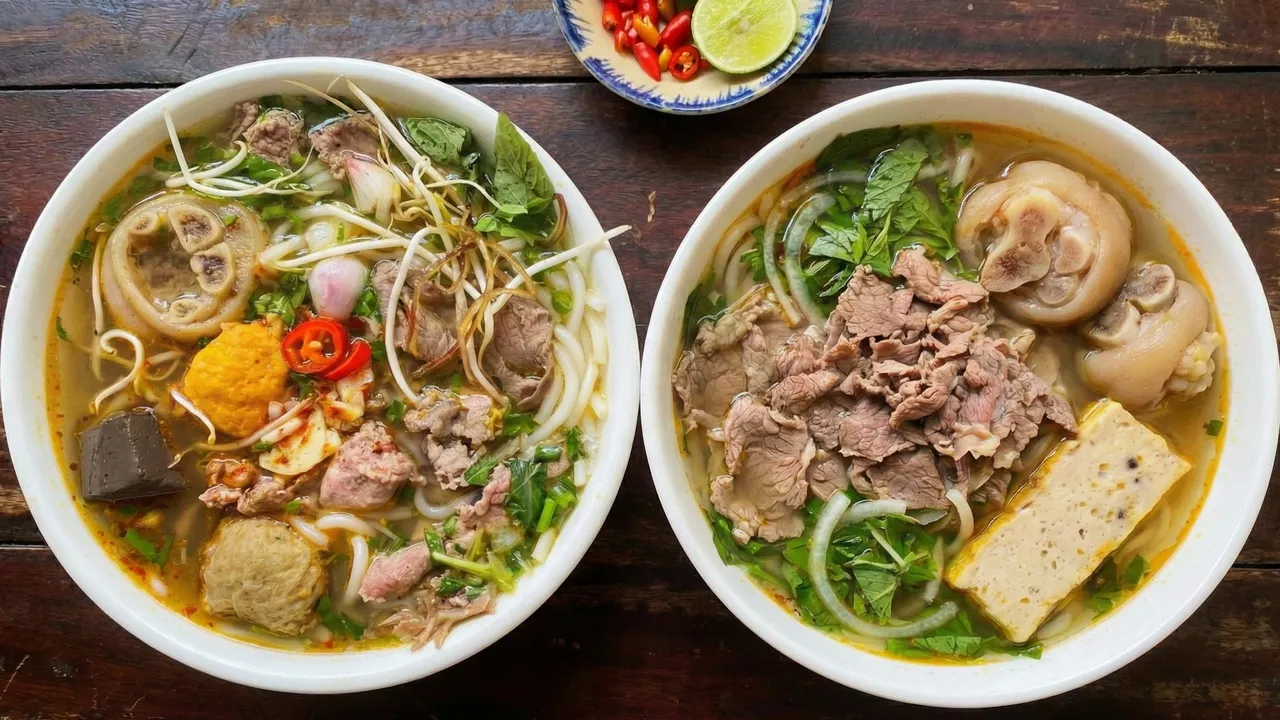
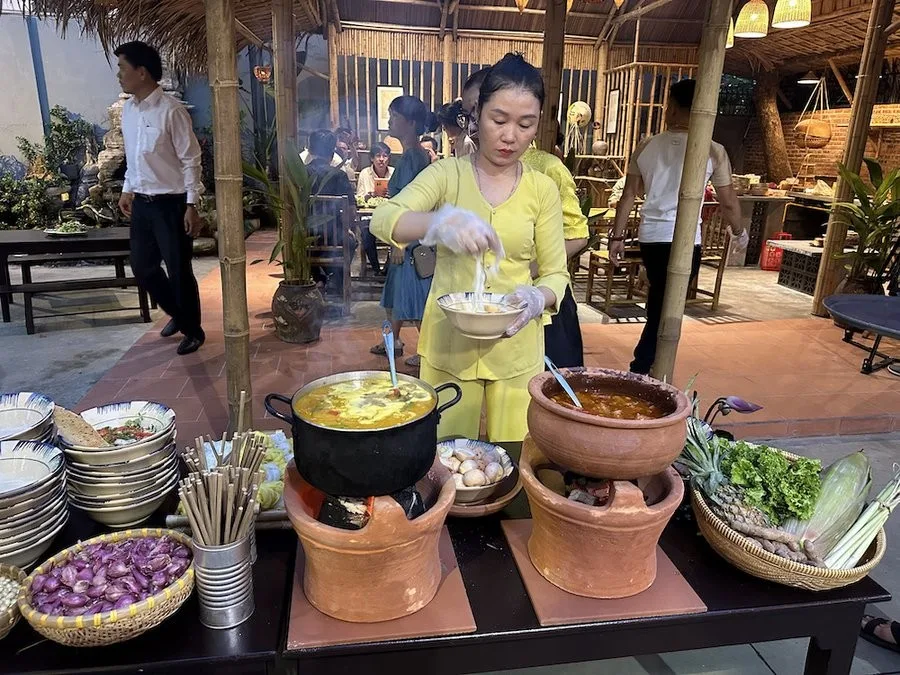
Before lifting chopsticks to toss a bowl of mì Quảng, seasoned diners savor the dish with their eyes. An authentic bowl is a vivid canvas of natural colors: warm golden turmeric, eye-catching red-orange annatto oil, a lush mound of fresh greens, and a bright ruby spoonful of sautéed chili sauce.
In Episode 3, join Bánh Mì Xin Chào in the kitchen to see how central Vietnamese cooks balance colors, fresh vegetables, heat, and crunch in every bowl.

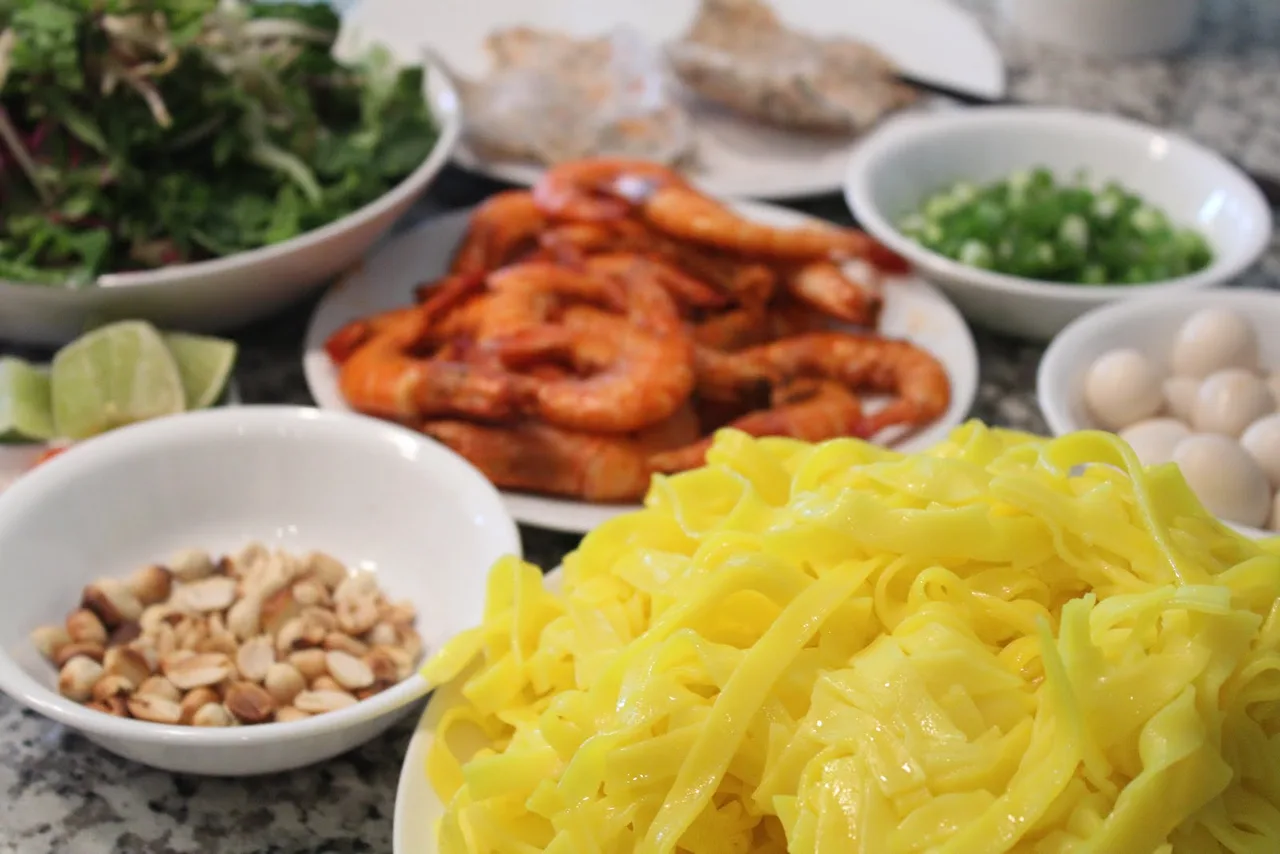
Golden turmeric for chicken, red annatto oil for shrimp and pork: the natural palette of nước nhưn
In our first two episodes, we saw how mì Quảng welcomes nearly any seasonal ingredient into its sauce pot while resting on a bed of ivory-white rice ribbons, golden turmeric-tinted strands, or rustic red brown-rice noodles [1]. Step into long-standing noodle shops across Da Nang and historic Quang Nam, and you will notice a distinct visual code separating the two most beloved nuoc nhun toppings.
When preparing chicken mì Quảng (as well as snakehead fish or frog), cooks crush fresh turmeric root to marinate free-range chicken with fish sauce and white shallots before braising. Turmeric removes any gamey aroma while tinting the tender chicken and underlying noodles a warm, appetizing gold [1] [4].
By contrast, a pot of shrimp and pork nuoc nhun with quail eggs begins by gently frying annatto seeds in hot oil to extract a glossy red-orange hue. As river shrimp and pork belly simmer in that oil, the natural annatto tint merges with rich shrimp roe to create an eye-catching glaze [3].
Across our kitchens in Japan, Bánh Mì Xin Chào preserves both visual signatures. While our Chicken Mi Quang shines with golden turmeric warmth, our Xin Chao Mi Quang with shrimp and pork immediately catches the eye with its vibrant annatto-red sauce.

Why a true bowl of mì Quảng always needs plenty of fresh greens for balance
If concentrated nuoc nhun brings savory depth and nutty peanut oil, the element that keeps the bowl refreshing is its generous bed of raw vegetables. In central Vietnam, diners never treat herbs as a tiny garnish; fresh greens fill nearly half the bowl.
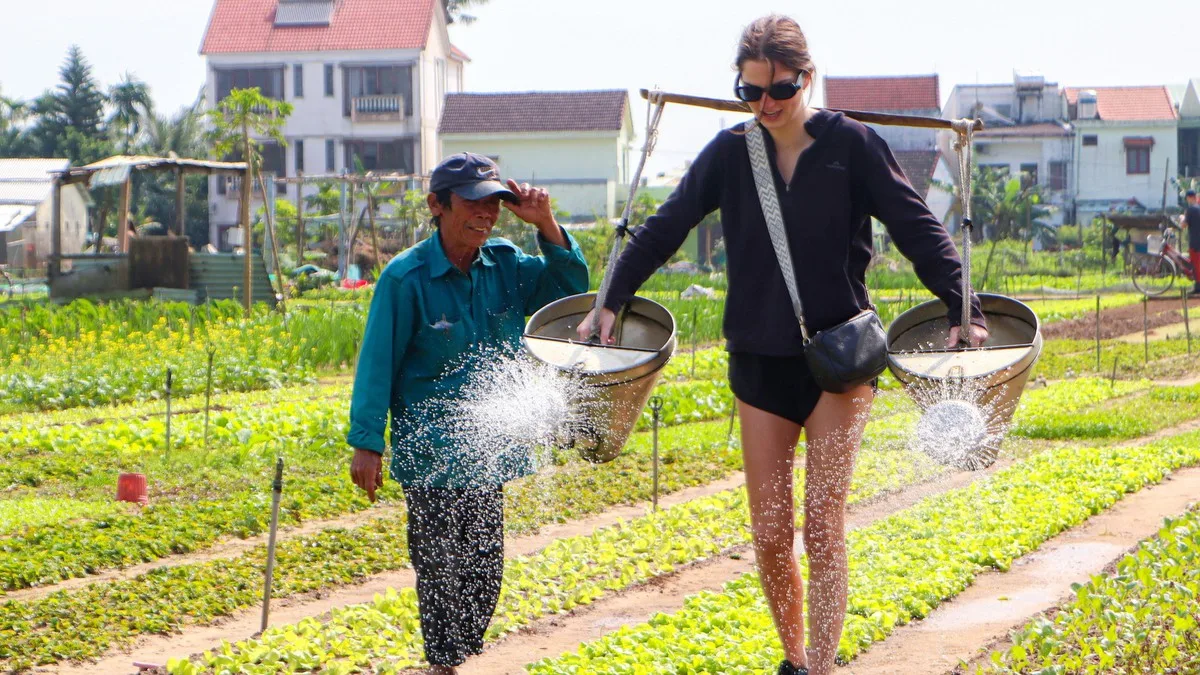
In Part 2 of his Philosophy of Mi Quang series, the late writer Vu Duc Sao Bien wrote proudly that nowhere else matched the fresh greens served with his homeland's noodles. A classic basket combines tiny two-leaf baby mustard sprouts (cai con), thinly shaved white banana blossom (bap chuoi su), bean sprouts, lettuce, mint, bitter herbs, and sawtooth coriander [2]. Across the Quang-Da region, the most celebrated cradle of those aromatic herbs is the 400-year-old Tra Que vegetable village (formerly Cam Ha commune in Hoi An, now part of Hoi An Tay ward in Da Nang city), where farmers enrich sandy alluvial beds with lagoon seaweed and welcome international visitors to carry traditional dual watering cans through the rows at dawn [8].
Looking at the bowl through a medical lens in Tuoi Tre Newspaper, Dr. Tran Ba Thoai of Da Nang Hospital described mì Quảng as a naturally balanced meal in miniature. Pairing rice carbohydrates, shrimp or meat protein, and plant-based peanut fats with an abundance of raw vegetables delivers essential vitamins and fiber in every bite [5].
That interplay between concentrated sauce and raw greens also caught the eye of Vietnamese-American home cook Thuy on her personal culinary blog Blog of Salt back in January 2010, where she recalled her father's memory of how mì Quảng was born in Quang Nam during lean times when families made the most out of whatever humble ingredients they had at home [9]. Comparing bowls in Vietnam with those overseas, she noted a practical kitchen secret: because mì Quảng uses so little broth, hometown cooks season the meat and nuoc nhun boldly so that when tossed with a generous mound of crisp raw herbs and thick noodles, the flavors mellow into natural harmony [9].
Even though Japanese noodle bowls rarely include large portions of raw greens, Bánh Mì Xin Chào stays faithful to this central Vietnamese habit. To recreate the multi-layered textures of a hometown herb basket using fresh produce in Japan, our kitchen finely cuts and tosses together four local greens: mizuna, Japanese lettuce (retasu), cabbage (kyabetsu), and Japanese radish sprouts.
Each vegetable is chosen to represent a signature element of traditional mì Quảng greens: retasu lettuce and mizuna form a cool, leafy base, finely shredded kyabetsu cabbage delivers the crisp bite of shaved banana blossom, and tender Japanese sprouts echo the gentle peppery kick of baby cai con mustard greens. Tossed into the warm noodles and concentrated sauce, this generous medley brings effortless balance to every mouthful.
Fiery Da Nang sweet chili sauce and crispy prawn crackers in Japan
The final spark that wakes up the palate comes from chili heat and a joyful crunch. Central Vietnamese diners love bold spice suited to their sunny coastal climate [3]. At traditional stalls, many bite straight into a whole green horn chili between mouthfuls of noodles, bringing a rosy glow to their cheeks as Vu Duc Sao Bien playfully described in verse [2] [5].
Equally iconic on Quang and Da Nang tables is sautéed chili paste (tuong ot xao). As profiled by Thanh Niên and VnExpress, cooks simmer salted fermented red chilies with yellow sugar, good fish sauce, and annatto oil over low heat until thick and jammy, then fold in plenty of golden fried garlic and toasted sesame seeds [6] [7].
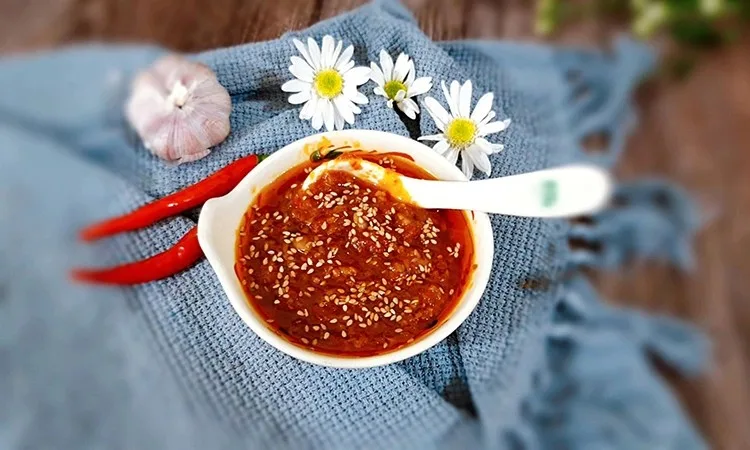
That initial touch of garlicky sweetness followed by an intense, lingering heat makes a bowl of mì Quảng unforgettable [6]. At Bánh Mì Xin Chào in Japan, that small ruby saucer of Da Nang sweet and extra-spicy chili sauce topping is an essential companion alongside the tray. Even co-founder Bui Thanh Tam, whenever he sits down at the shop for a bowl of chicken mì Quảng, which he playfully began calling "a serving of Chicken-flavored National Intangible Cultural Heritage" following Vietnam's 2024 heritage inscription, always adds a side dish of Da Nang chili sauce to complete the flavor of home.
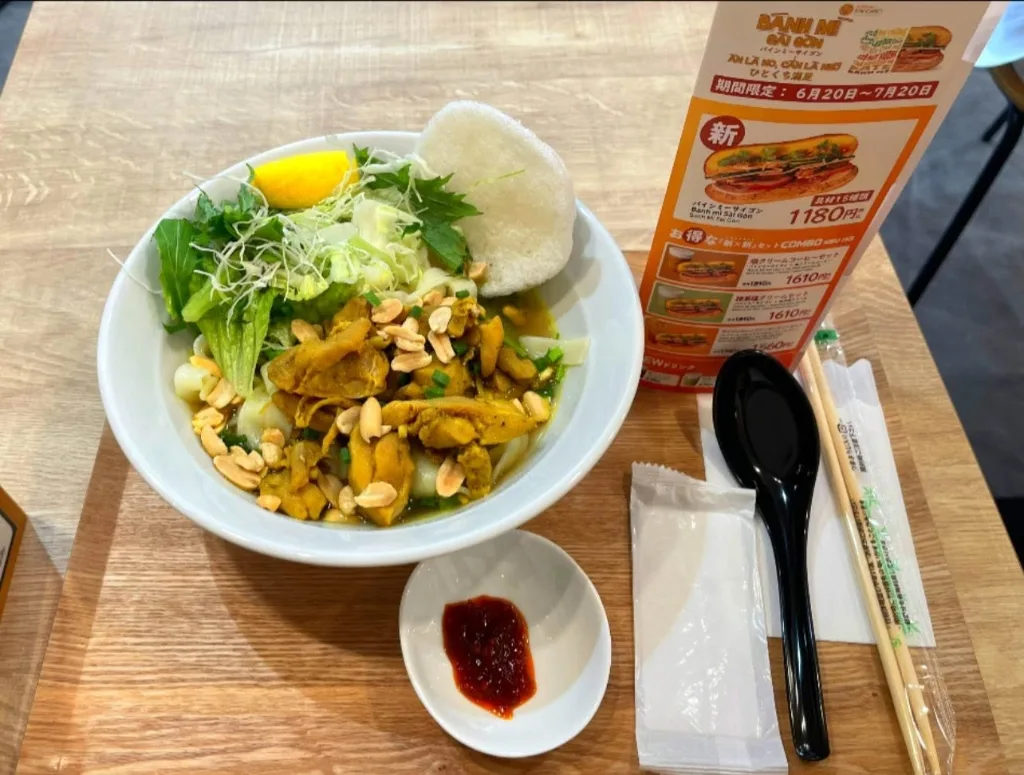
To keep the signature crunch alive while ensuring streamlined kitchen preparation and consistent daily supply across Japan, Bánh Mì Xin Chào replaces traditional sesame rice crackers with freshly fried crispy prawn crackers (phong tom).
When served, the prawn crackers are tucked upright along the side of the bowl, evoking the familiar sight of dried seaweed sheets (nori) resting against the rim of a Japanese ramen bowl. This thoughtful placement balances both visual presentation and taste, keeping the upper half of each cracker airy and crisp while the base gently meets the savory sauce below. With the bowl now complete, what stories unfold around morning noodle tables in central Vietnam? Join us in Episode 4 to explore the spirited "Quang Nam loves a debate" character.
References
- Vũ Đức Sao Biển (2014, April 8). Triết lý mì Quảng - Kỳ 1: Để ăn mì Quảng đúng bài. Báo Đà Nẵng.https://baodanang.vn/triet-ly-mi-quang-ky-1-de-an-mi-quang-dung-bai-3029441.html
- Vũ Đức Sao Biển (2014, April 11). Triết lý mì Quảng - Kỳ 2: Biến tấu của mì Quảng. Trung tâm Quản lý Bảo tồn Di sản Văn hóa Hội An.https://hoianheritage.net/vi/trao-doi-chuyen-nganh/chuyen-de-nghien-cuu-trao-doi/Triet-ly-mi-Quang-Ky-2-Bien-tau-cua-mi-Quang-254.html
- Yutaka (2013, October 25). Mì ngon đất Quảng. VnExpress.https://vnexpress.net/mi-ngon-dat-quang-2887744.html
- Hoàng Lê (2024, May 28). Mì Quảng cùng xứ đã khác nhau, nói gì xa xứ. Tuổi Trẻ Online.https://tuoitre.vn/mi-quang-cung-xu-da-khac-nhau-noi-gi-xa-xu-20260528150520257.htm
- ThS.BS Trần Bá Thoại (2008, March 27). Mì Quảng - khẩu phần hợp lý. Tuổi Trẻ Online.https://tuoitre.vn/mi-quang---khau-phan-hop-ly-249475.htm
- Báo Thanh Niên (2015, May 6). Ngon nức tiếng tương ớt xào Quảng Nam. Báo Thanh Niên.https://thanhnien.vn/ngon-nuc-tieng-tuong-ot-xao-quang-nam-185467545.htm
- Bùi Thủy (2020, November 26). Tự làm tương ớt kiểu Hội An tại nhà. VnExpress.https://vnexpress.net/tu-lam-tuong-ot-kieu-hoi-an-tai-nha-4197425.html
- Thanh Nguyên (2026, January 13). Du khách nước ngoài mê cuốc đất tại làng rau hơn 400 năm tuổi. Tuổi Trẻ Online.https://tuoitre.vn/du-khach-nuoc-ngoai-me-cuoc-dat-tai-lang-rau-hon-400-nam-tuoi-20260113162031878.htm
- Thuy (2010, January 21). Mi Quang (Quang Nam Noodles). Blog of Salt.http://thuyancom.blogspot.com/2010/01/mi-quang-quang-nam-noodles.html