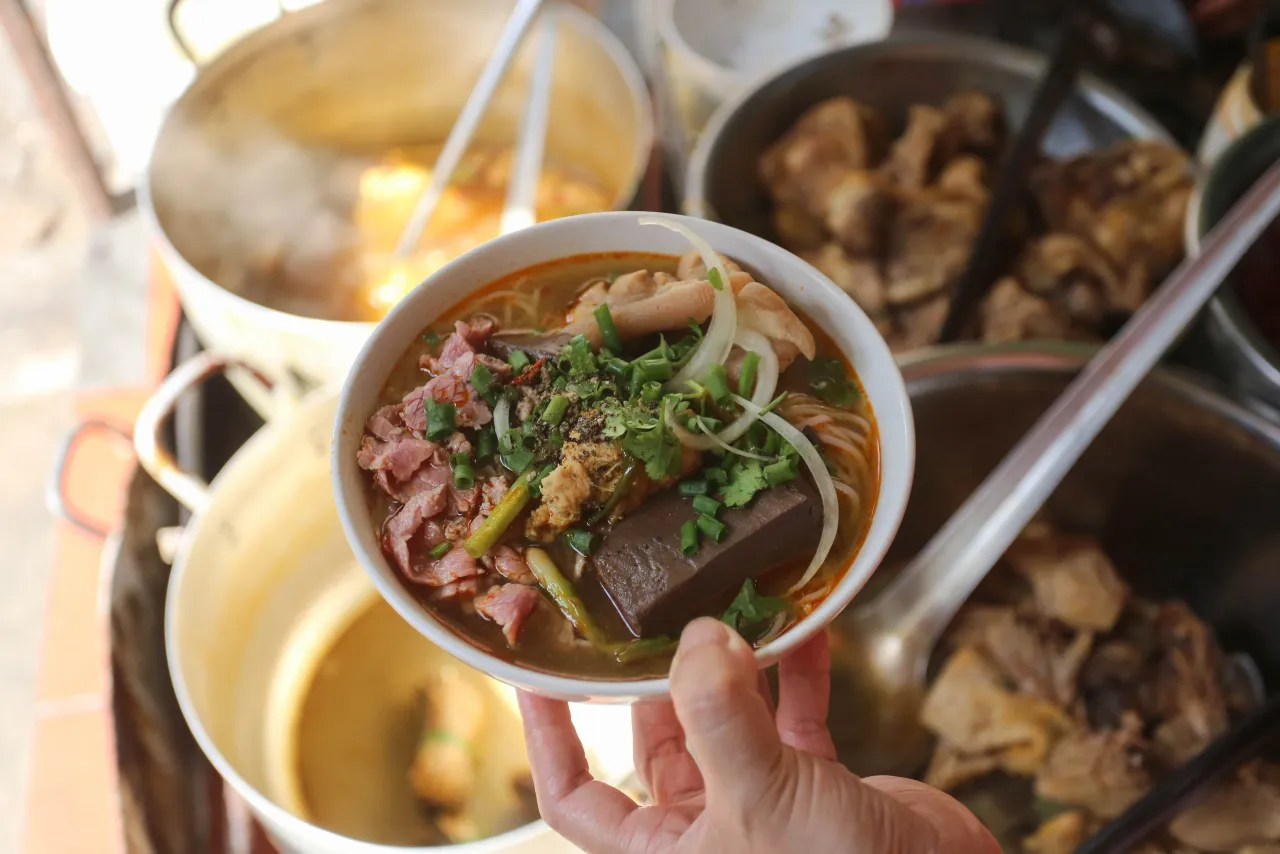
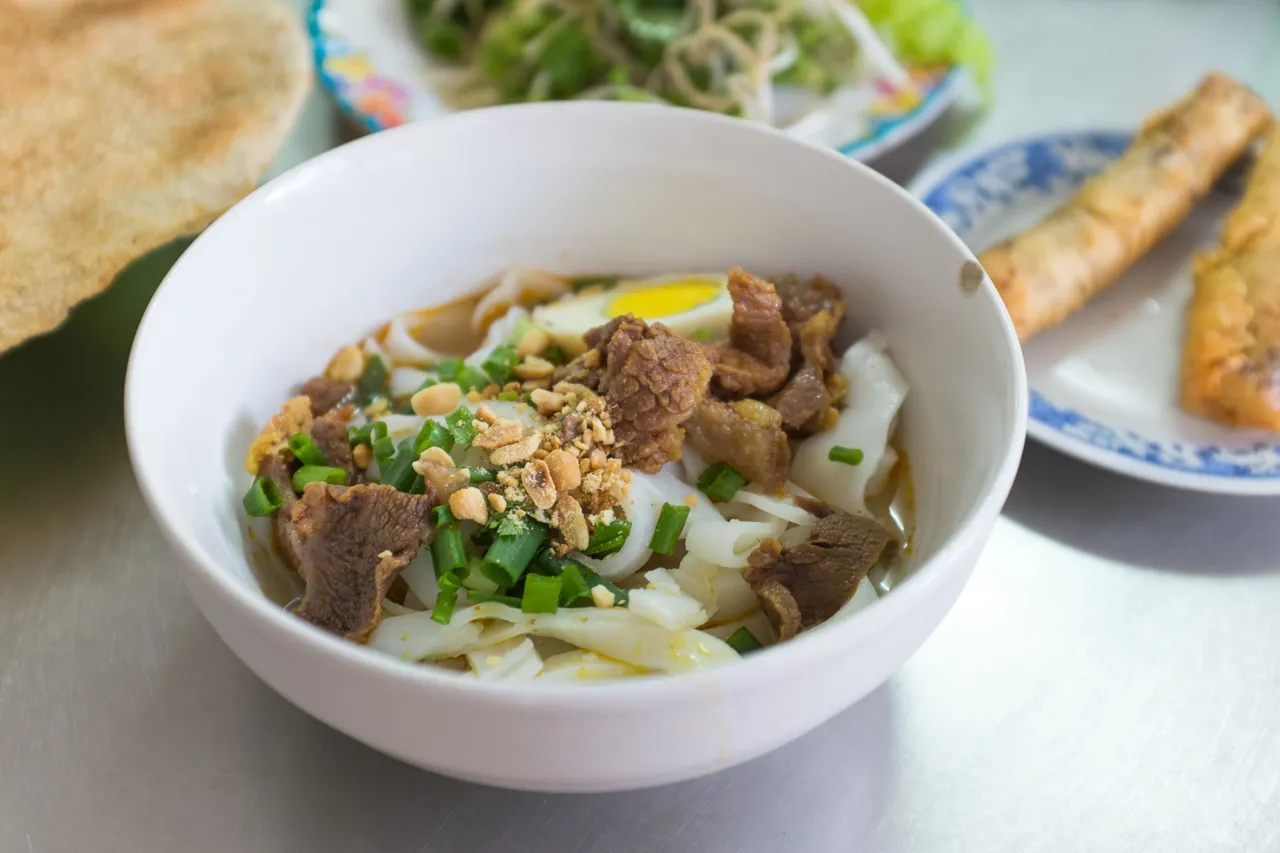
Step into a neighborhood noodle shop in central Vietnam at dawn and you will notice locals rarely order using the full geographic name. They simply ask the owner for a bowl of shrimp and pork or a bowl of chicken. Behind that unassuming morning habit lies more than four centuries of cultural exchange across historic Quang Nam and Da Nang, reunited since July 2025 under the expanded boundaries of Da Nang city.
In this opening episode of our six-part series "The mì Quảng journey", join Bánh Mì Xin Chào as we travel upstream along the Thu Bon river to trace the footsteps that gave birth to the dish.
Southward footsteps in 1602 and a Viet and Cham meeting on the Thu Bon river
Enduring dishes are often born where human migrations meet. Historians tracing the origin of mì Quảng frequently begin in 1602, when Lord Nguyen Hoang sent his son Nguyen Phuc Nguyen to govern Quang Nam province and establish the Thanh Chiem garrison (formerly in Dien Ban town, Quang Nam province, now part of Dien Ban ward in Da Nang city) [1]. Two years later, lands south of the Hai Van pass were incorporated into Quang Nam, turning Thanh Chiem into the second political and economic hub of southern Dai Viet after Phu Xuan [1].
Settlers arriving from northern river deltas carried stone mills and wet-rice farming skills into the new frontier. At the same time, the indigenous Cham communities remained an active part of local life. Speaking with Da Nang Newspaper about his historical study Co 500 nam nhu the (There Were 500 Such Years), journalist Ho Trung Tu noted that many Cham families stayed, intermarried with Vietnamese newcomers, and shaped local speech and daily customs [3].
That quiet coexistence naturally entered the kitchen. Contributing to the heritage dossier for mì Quảng, cultural researcher Ton That Huong pointed out that Viet and Cham traditions meet right inside the core ingredients [2]. Steamed rice-flour sheets recalling Cham tapei racam cakes come together with bold fermented fish sauce, pressed peanut oil, roasted peanuts, and golden turmeric suited to a sun-drenched coast [2].
How local paddy rice replaced imported wheat at the port of Faifo
A few kilometers downstream from the Thanh Chiem garrison lay the bustling port of Hoi An. An account written in 1621 by Italian Jesuit Cristophoro Borri, cited by Da Nang Newspaper, described Faifo (now Hoi An ward in Da Nang city) as busy enough to host distinct Chinese and Japanese merchant quarters side by side [4].
This maritime crossroads inspired a compelling hypothesis about how the noodle strand took shape. Folklore researcher Phung Tan Dong suggested that local cooks likely encountered wheat-based noodle dishes brought by Chinese merchants in the port town [2]. At the time, however, imported wheat flour was an expensive urban commodity reserved for dishes like cao lau.
Farming families along the Thu Bon river found an ingenious local answer. They turned to abundant paddy rice from their own fields, soaking the grain, grinding wet batter, steaming thin sheets over boiling water, and slicing wide ribbons by hand [2]. This interplay between port-town trade and village kitchens was also explored by anthropologist Nir Avieli during his fieldwork in Hoi An for Rice Talks (Chuyen com Hoi An) [5]. As reviewed in VnExpress, everyday family meals and local seasoning habits reveal how centuries of cultural exchange live on at the dining table [5].
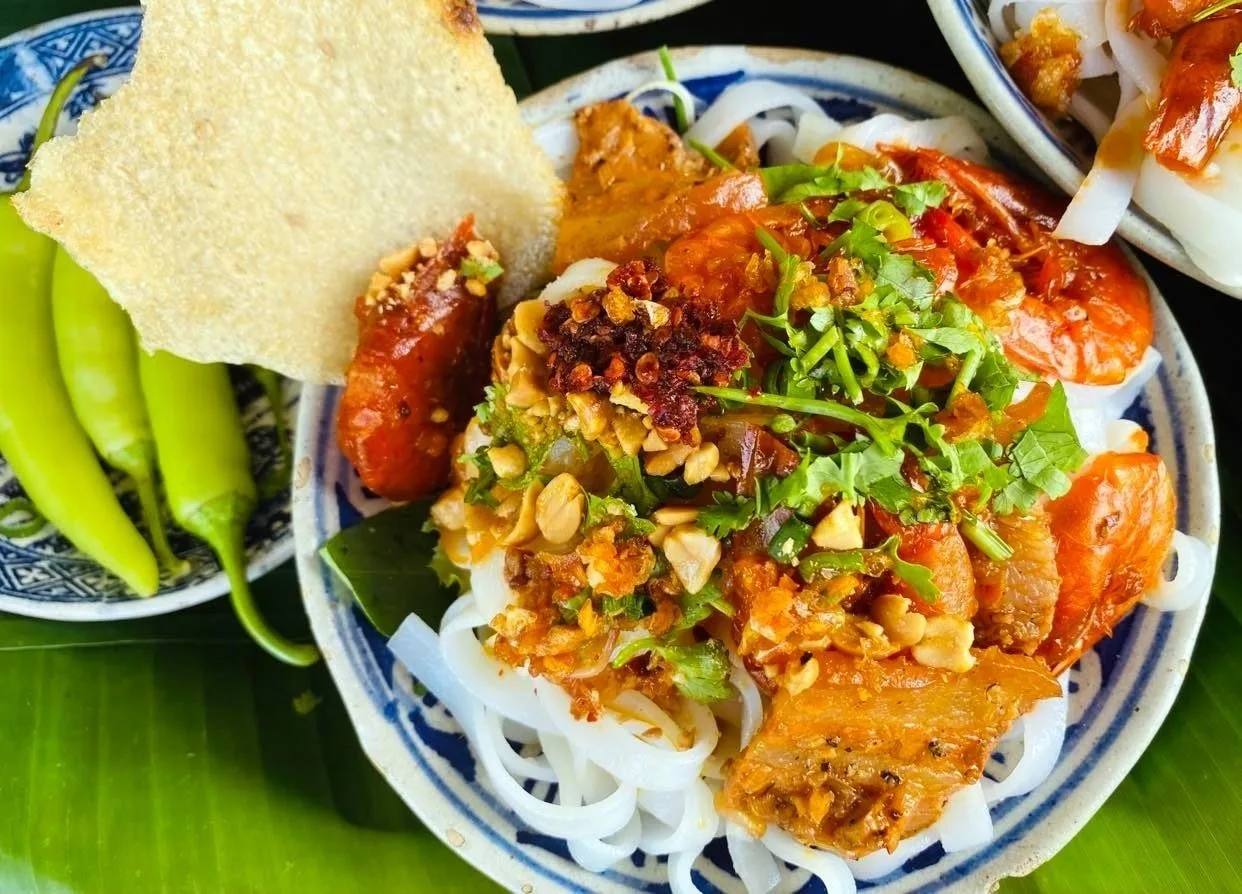
Phu Chiem shoulder poles and the maxim of constant noodles, endless toppings
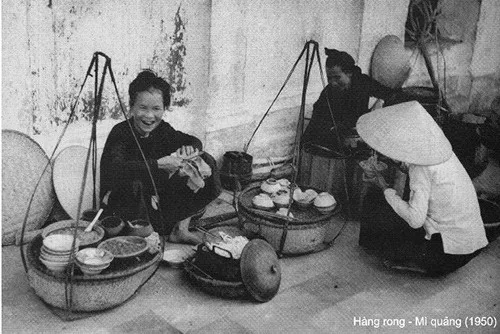
While Hoi An sparked trade, riverside villages nurtured mì Quảng into a daily staple. None became more renowned near the old garrison than Phu Chiem village along the Thu Bon river, now also within Dien Ban in Da Nang city [7]. Reporting in Da Nang Newspaper describes generations of Phu Chiem women waking before dawn to steam noodle sheets and walk village lanes with bamboo shoulder poles, balancing a simmering clay pot of sauce opposite a basket of fresh garden greens [7].
Looking at that humble shoulder pole, researcher Phung Tan Dong captured the dish's spirit in a single maxim:
The noodle strand remains constant, while its savory topping transforms endlessly [2].
The late writer Vu Duc Sao Bien celebrated that same openness in his Philosophy of Mi Quang essays. White or turmeric-tinted rice ribbons form a steady canvas, while the nuoc nhun topping welcomes whatever the season brings. River shrimp, pork belly, free-range chicken, snakehead fish, soft-shell crab, or duck can all simmer into a fragrant pot of sauce [6] [8].
Because the dish feels so approachable, novelist Nguyen Nhat Anh once remarked in Quang People Going Out for Mi Quang (quoted by Da Nang Newspaper) that while some northerners never cook pho at home and some southerners never simmer hu tieu, almost every native of Quang land has cooked a pot of mì Quảng for loved ones [4]. Yet what keeps those rice ribbons from turning soft, and why does a classic bowl use barely a ladle of sauce at the bottom? Join us in Episode 2 as we step beside the steaming hearth at three in the morning.
References
- P.V (2017, August 1). Dinh trấn Thanh Chiêm được xếp hạng Di tích cấp quốc gia. Báo Đà Nẵng.https://baodanang.vn/dinh-tran-thanh-chiem-duoc-xep-hang-di-tich-cap-quoc-gia-3028353.html
- Trung tâm Quản lý Bảo tồn Di sản Văn hóa Hội An (2021, April 15). Xây dựng hồ sơ Di sản văn hóa phi vật thể cho Mỳ Quảng. Di sản Văn hóa Thế giới Hội An.http://www.hoianworldheritage.org.vn/vi/news/Van-hoa-nghe-thuat/xay-dung-ho-so-di-san-van-hoa-phi-vat-the-cho-my-quang-2231.hwh
- Báo Đà Nẵng (2011, August 7). Khảo luận “Có 500 năm như thế”: “Là phóng sự bắt nguồn từ một bài báo”. Báo Đà Nẵng.https://baodanang.vn/khao-luan-co-500-nam-nhu-the-la-phong-su-bat-nguon-tu-mot-bai-bao-3227464.html
- Hứa Xuyên Huỳnh (2013, April 20). Dấu ấn Quảng. Báo Đà Nẵng.https://baodanang.vn/dau-an-quang-3029841.html
- Quế Chi (2024, April 21). 'Chuyện cơm Hội An' - phong phú ẩm thực Việt. VnExpress.https://vnexpress.net/chuyen-com-hoi-an-phong-phu-am-thuc-viet-4737219.html
- Vũ Đức Sao Biển (2014, April 8). Triết lý mì Quảng - Kỳ 1: Để ăn mì Quảng đúng bài. Báo Đà Nẵng.https://baodanang.vn/triet-ly-mi-quang-ky-1-de-an-mi-quang-dung-bai-3029441.html
- Hoàng Đạo (2015, June 14). Di sản của người bán mỳ. Báo Đà Nẵng.https://baodanang.vn/di-san-cua-nguoi-ban-my-3051550.html
- Vũ Đức Sao Biển (2014, April 11). Triết lý mì Quảng - Kỳ 2: Biến tấu của mì Quảng. Trung tâm Quản lý Bảo tồn Di sản Văn hóa Hội An.https://hoianheritage.net/vi/trao-doi-chuyen-nganh/chuyen-de-nghien-cuu-trao-doi/Triet-ly-mi-Quang-Ky-2-Bien-tau-cua-mi-Quang-254.html