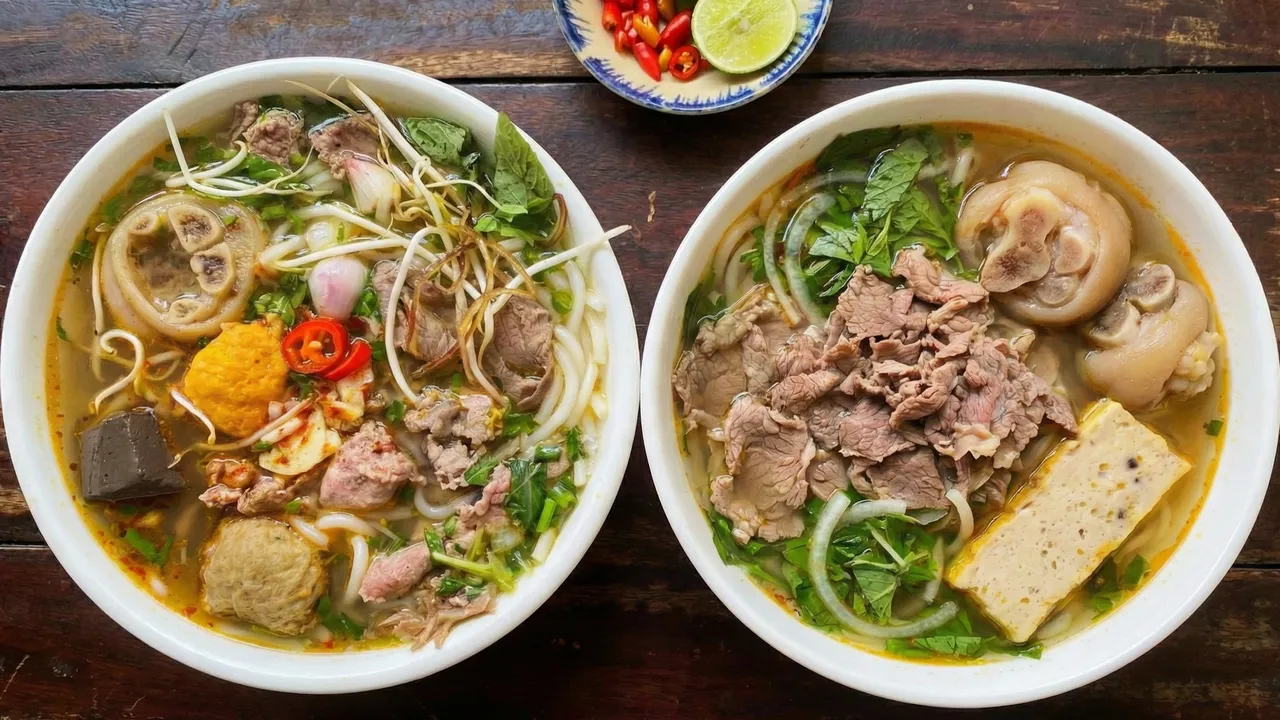
If in the previous article, we sat by the Bo River to hear the story of Van Cu village preserving the ancient craft, then today, Banh Mi Xin Chao invites you to shoulder your backpack and follow in the footsteps of expatriates who carried the beef noodle soup to open new territories.
Journeying far from the iconic Perfume River and Ngu Mountain, this humble dish embarked on a long pilgrimage stretching South and North. At every stop along the way, the noodle bowl subtly adapted its character to cater to local palates, creating nuances of flavor that feel at once novel and reassuringly familiar.
Into the South
When crossing the Hai Van Pass to reach the Southern land, the bowl of Bun Bo Hue seems to also imbue the generous, open-minded, and integrative character typical of the culture here.
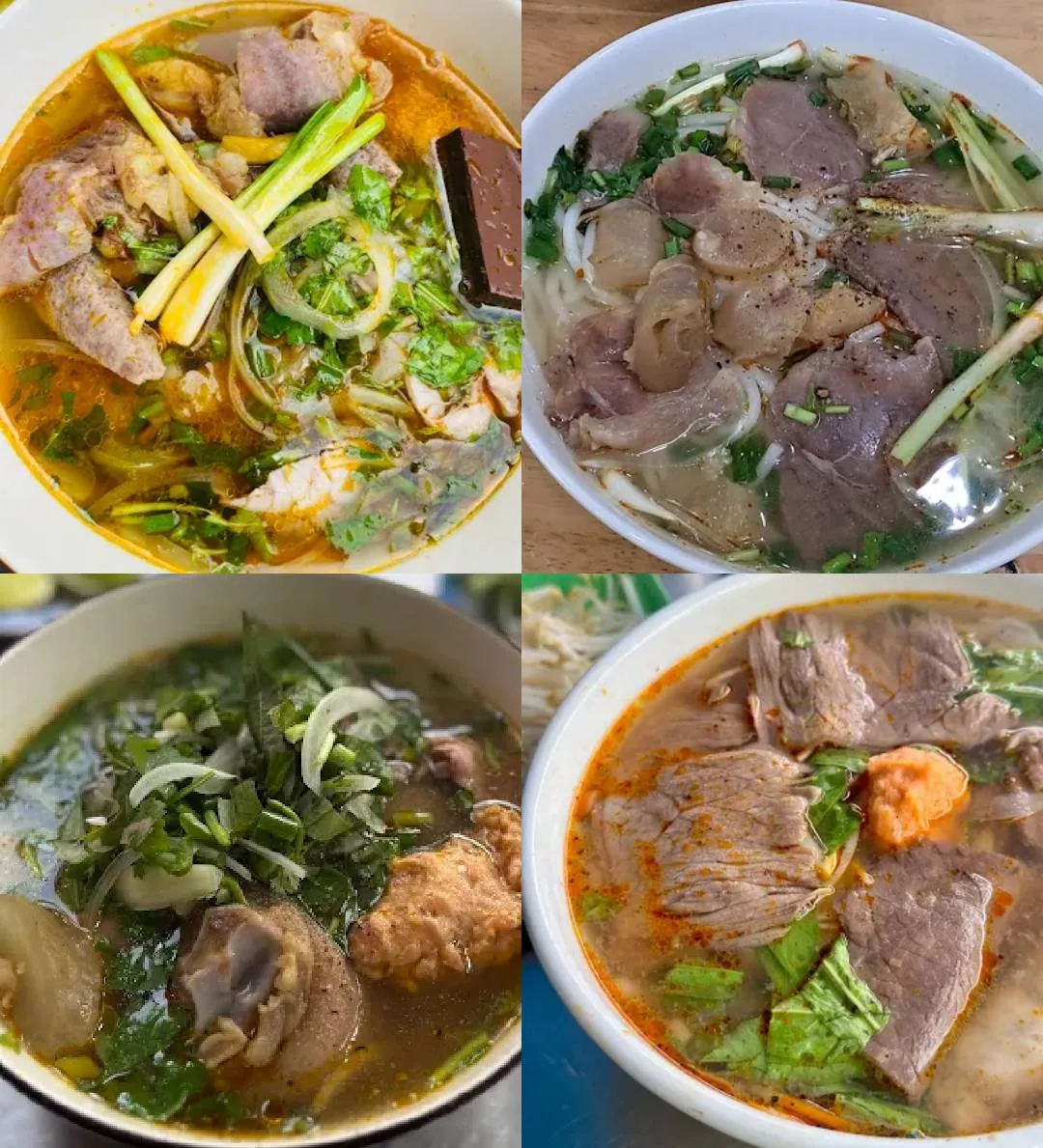
According to cultural researchers like Prof. Dr. Tran Ngoc Them, the Southern region is a convergence point for many varied immigrant groups [6, pp. 44-45], creating an open personality that easily accepts new things. This is clearly shown in the variation of the noodle bowl when it entered Saigon.
Due to the influence of the tropical palate and nature's abundance, Southerners often prefer sweetness. Therefore, the beef noodle broth in Saigon is often seasoned with rock sugar, or some places even simmer it with pineapple to create a mild sweetness and gentle aroma [3]. This is a bold creation that traditional Hue people could hardly imagine, but it makes perfect sense for local tastes.
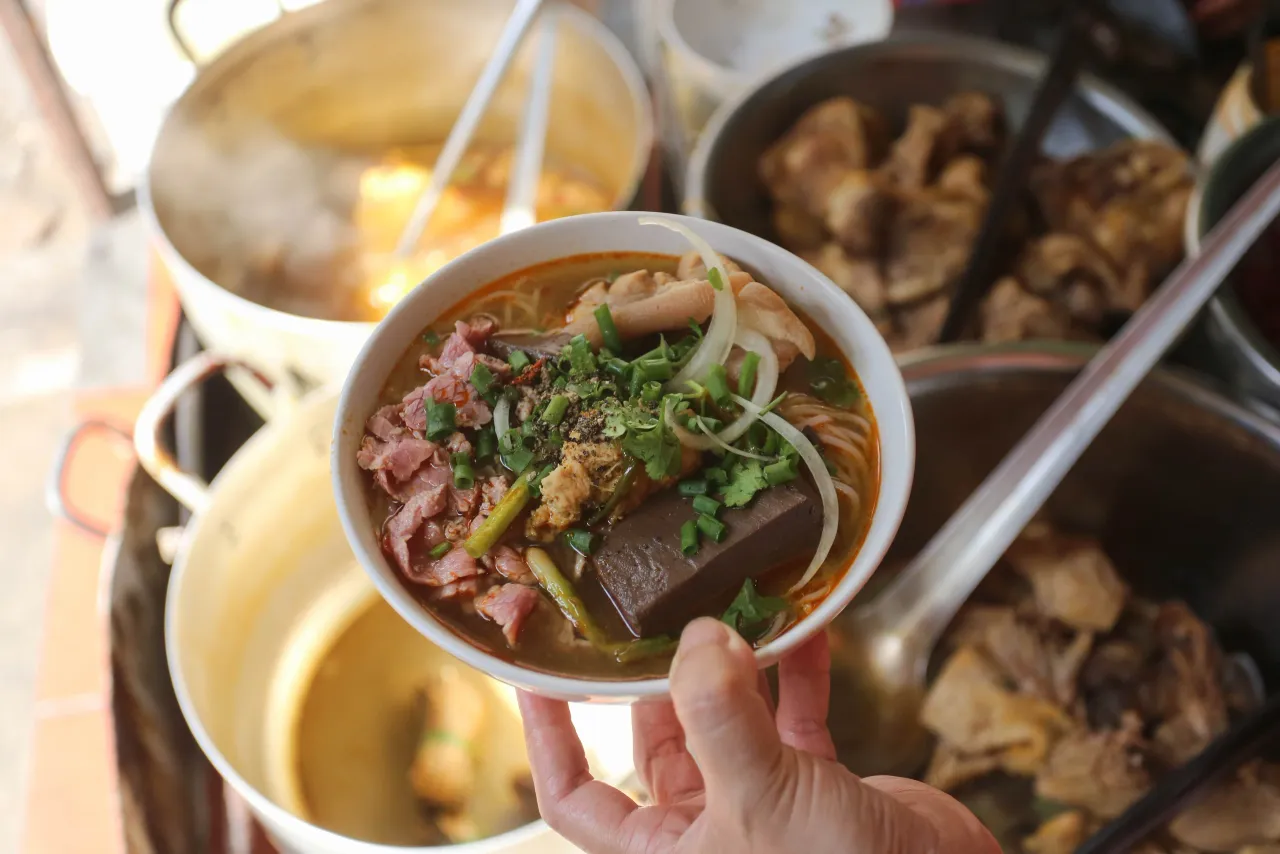
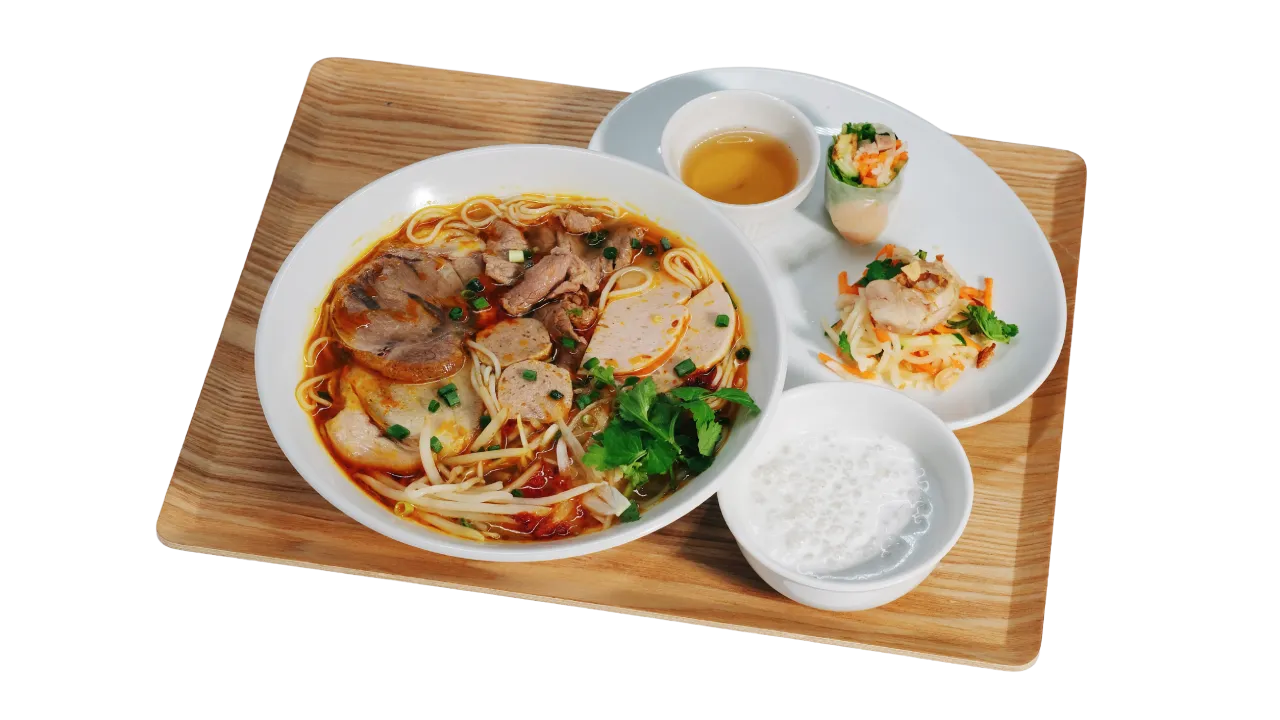
If Central culture leans towards thriftiness and subtlety, Southern culture leans towards abundance. A Saigon bowl of beef noodles is usually very full, a convergence of all kinds of foods: Vietnamese pork sausage (chả lụa), small sausages (chả cây), crab sausage (chả cua), beef balls, tendon, etc [2]. The accompanying raw herbs are also lush green and diverse, featuring split water spinach, bean sprouts, banana blossoms, and various aromatic herbs.
Out to the North
Traveling North, when Bun Bo Hue reaches Hanoi, it takes on a quieter, more refined appearance to suit the palate of the elegant capital dwellers (often called "Tràng An people").
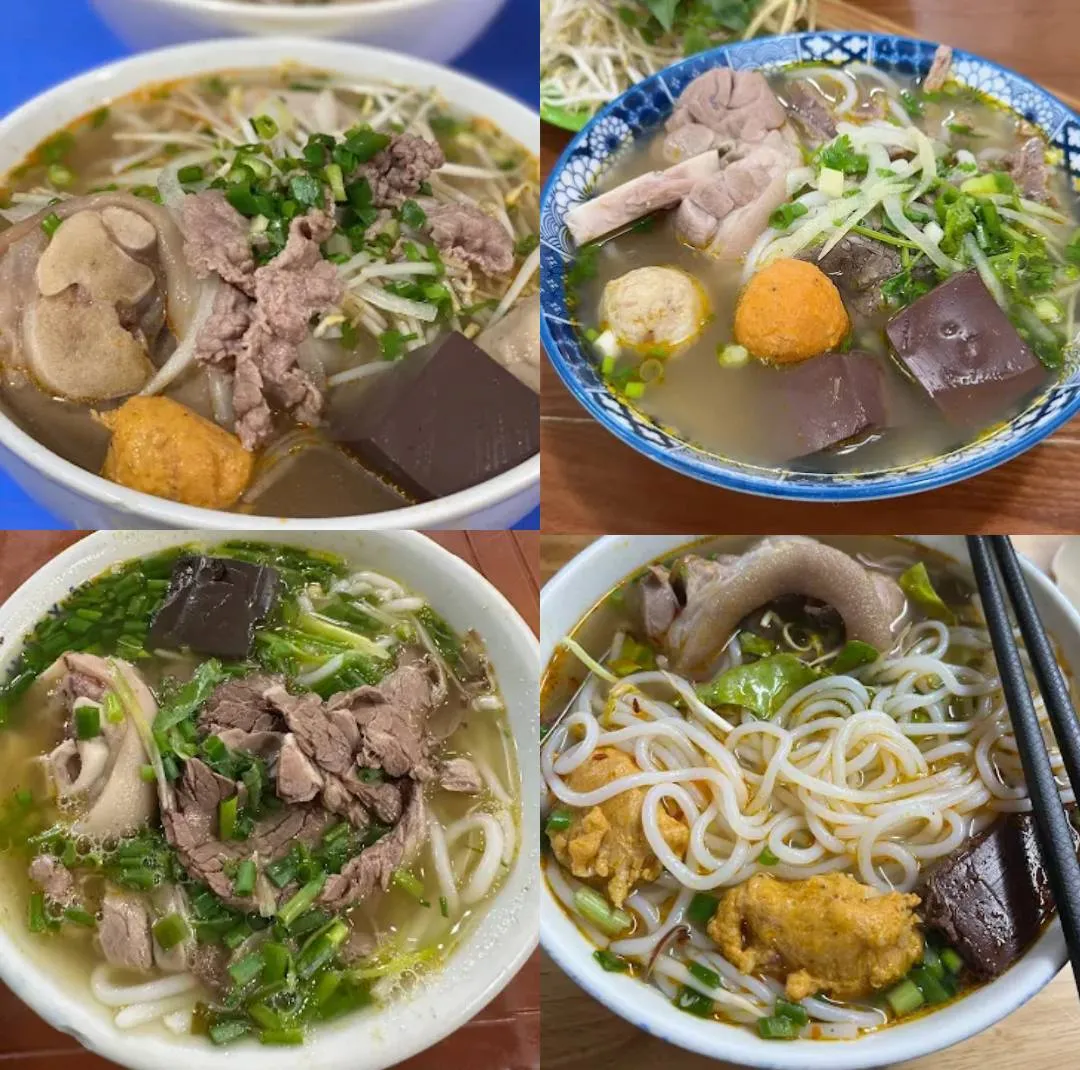
Hanoians inherently favor "thanh" (a concept of lightness, purity, and delicacy), preserving the natural flavor of ingredients. Therefore, the beef noodle broth in the capital is often adjusted to suit Northern tastes, using bones and beef tendon to extract natural sweetness, while limiting the overpowering smell of fermented shrimp paste (mắm ruốc) or the tongue-searing heat of Central region chili peppers [1].
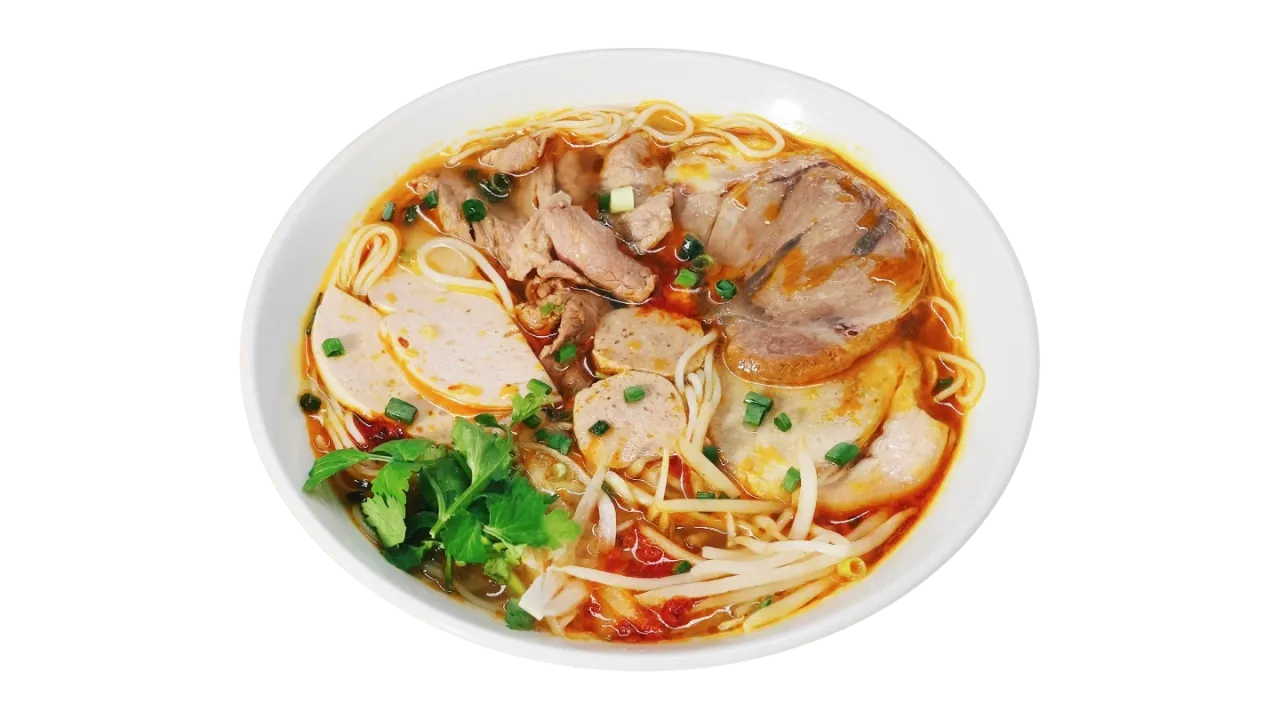
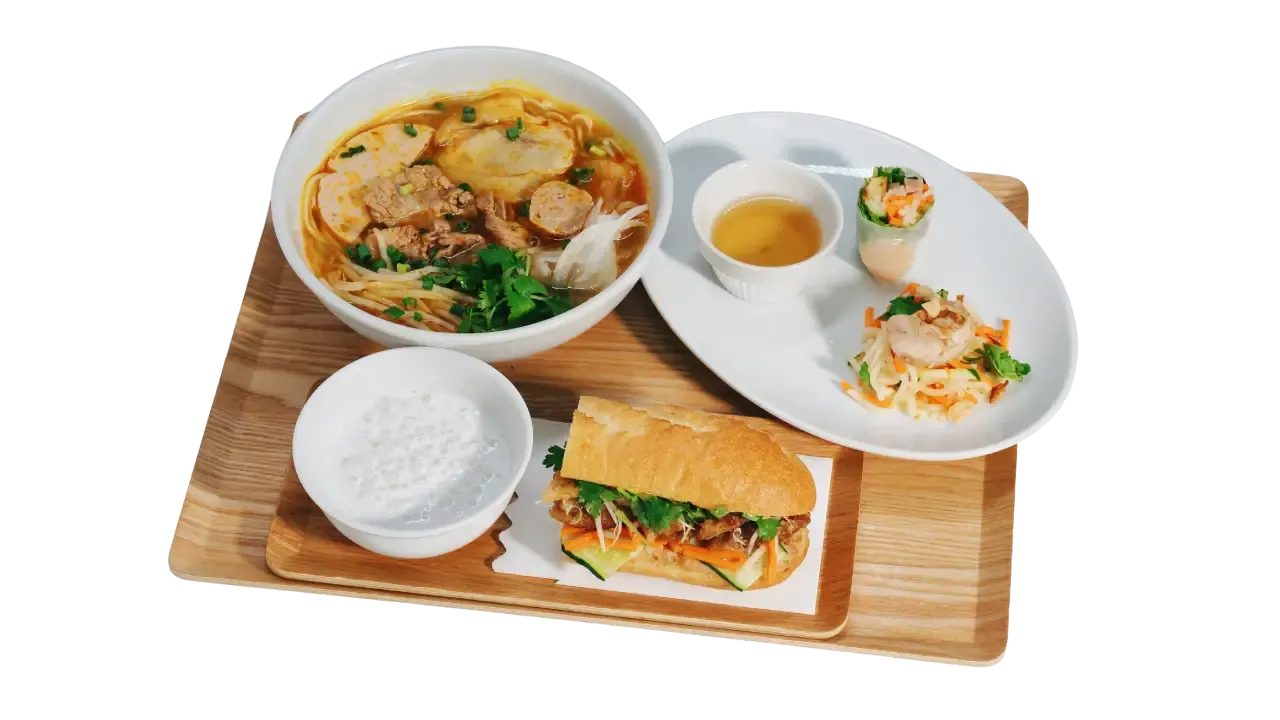
An interesting detail is that Northerners often prefer eating beef balls or crunchy simmered pig trotters instead of crab sausage (chả cua), the specialty dish that is very popular and forms the soul of the bowl in Hue. The noodle bowl is also usually petite, sized just right, not overflowing as in the South [1].
While Hue people use fresh chili mashed in fish sauce, when in Hanoi, the beef noodle bowl is usually served with vinegar and garlic-soaked fresh chili to balance the taste buds [4].
The noodle story: a curious paradox
There is an interesting thing that Banh Mi Xin Chao wants to share with you: the story about the noodle strand itself. Many Hue expatriates who have been away from home for a long time, when eating beef noodles in Saigon or Hanoi, are moved to tears because they find the noodle shape of their memories right there in a foreign land.
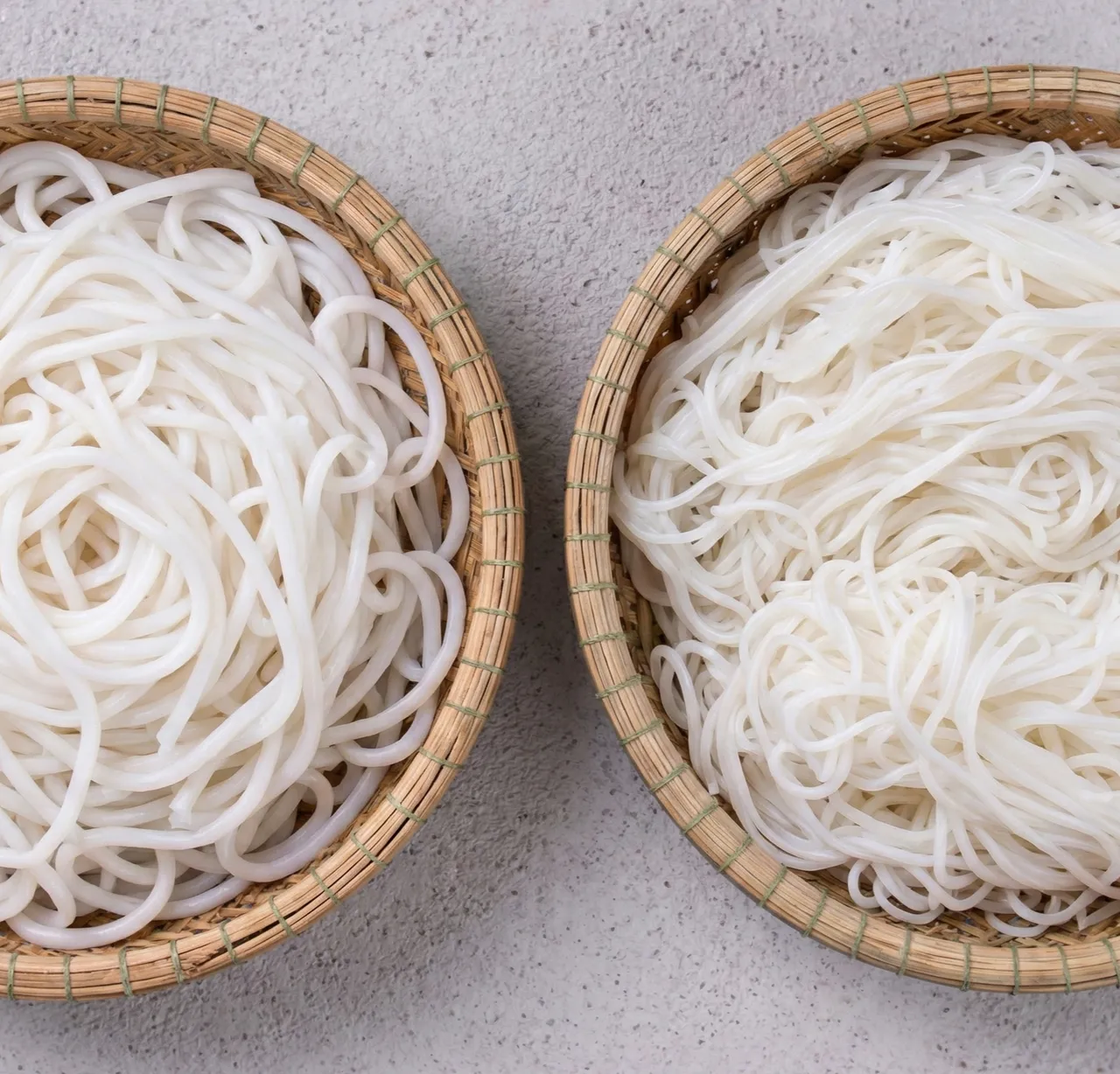
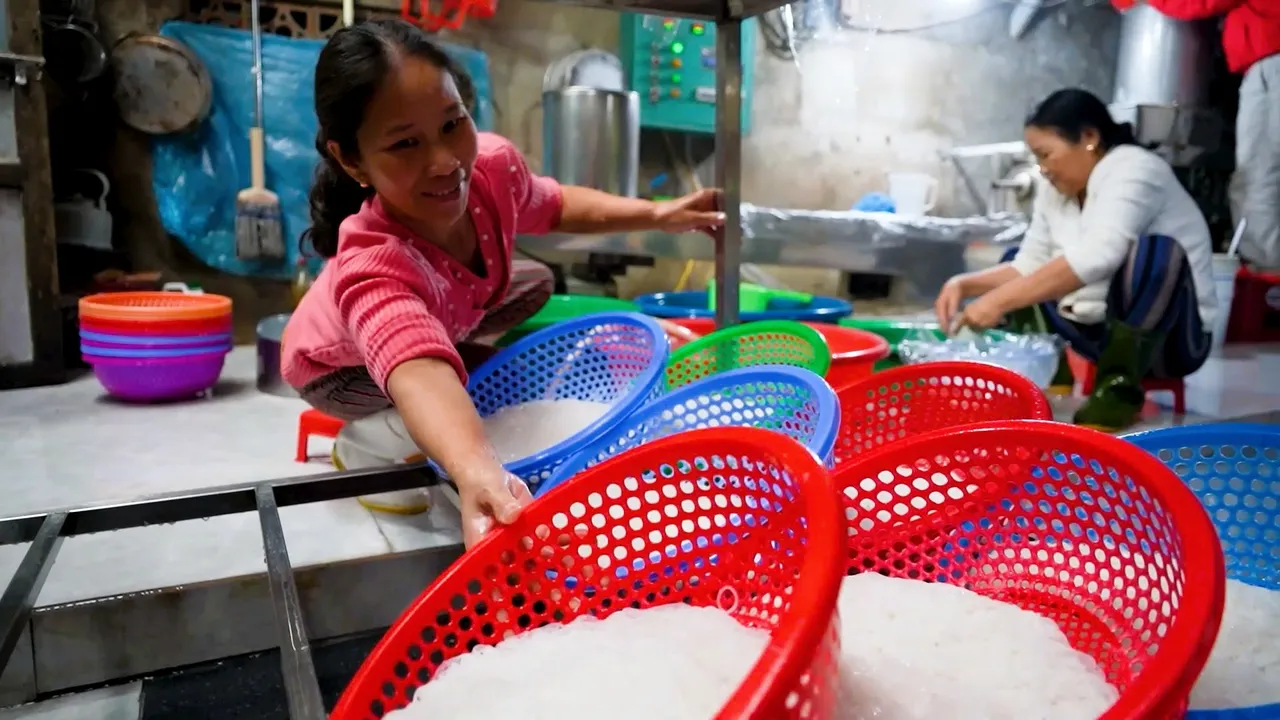
Following the old style, Hue beef noodles must use thick, round strands, pressed from a mold with holes about 3mm wide (ba phân) [3]. However, over time, many shops in Hue now have switched to using smaller noodle strands to cater to the majority taste and allow seasonings to absorb faster [1].
Conversely, those children of Hue who migrated South or North to establish themselves decades ago have kept this old custom very carefully. They remain loyal to the thick, round noodle strand, creating an interesting paradox: sometimes, to eat beef noodles in the true ancient Hue style regarding form, one has to find their way to Saigon or Hanoi, not Hue.
Every flavor is love
Whether it's the rich version of Hue, the sweet version of Saigon, or the refined version of Hanoi, every bowl carries the heart of the cook and respect for culinary culture.
A dish is like a person: knowing how to change to integrate, to be loved in a new land, but still retaining its distinct core essence. That is the reason why Bun Bo Hue is not just a dish of one locality, but has become the shared pride of Vietnamese cuisine [4].
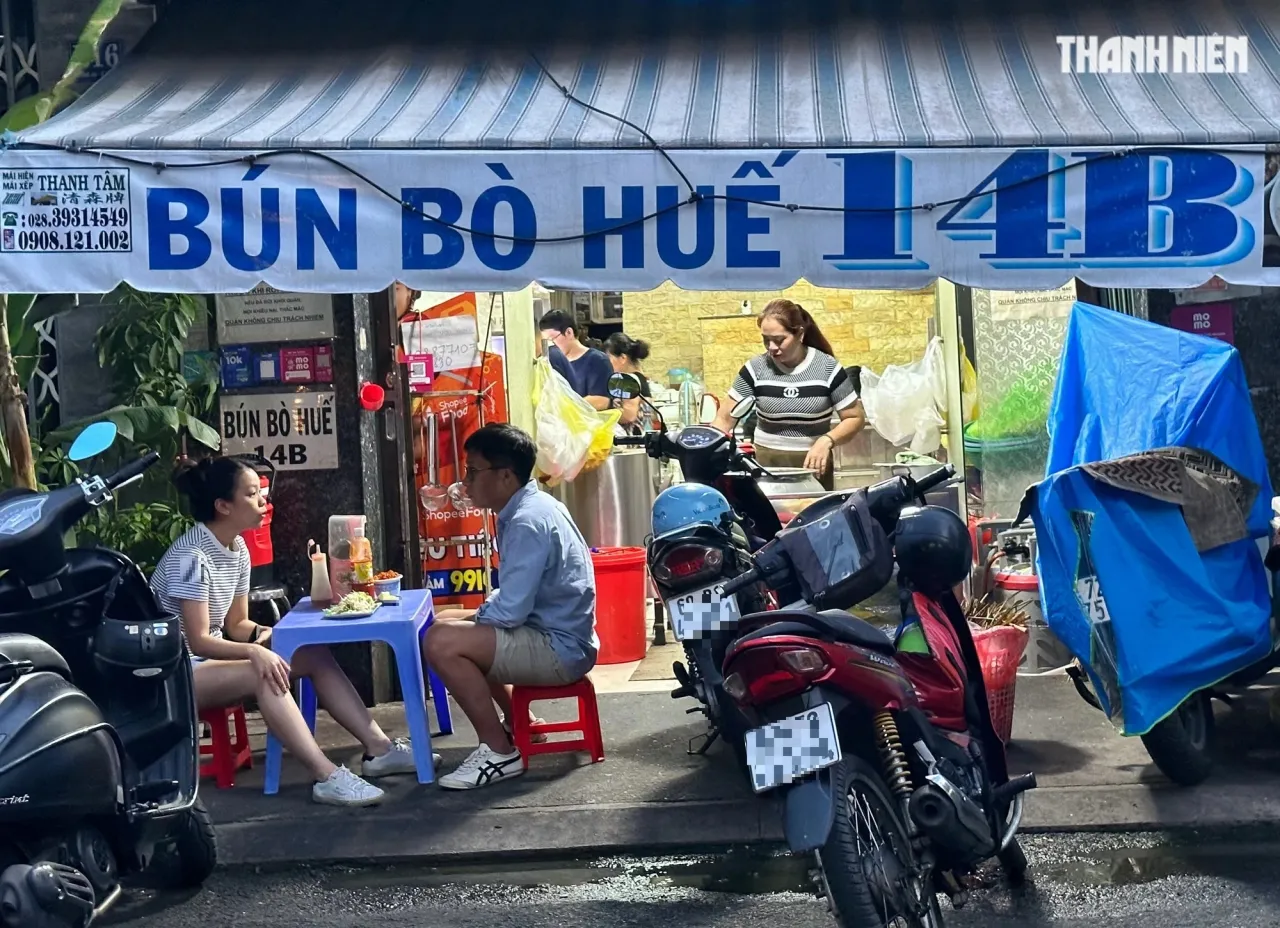
The journey of Bun Bo Hue does not stop within the S-shaped land. This dish has been and continues to reach out to the great ocean, conquering the most demanding diners across five continents.
Why did a world-renowned late chef exclaim that this was the best soup he had ever eaten? The story of Bun Bo Hue's position on the international map will be told by Banh Mi Xin Chao in the next episode. We invite you to read along.
References
- Huỳnh Nhi (2021, October 18). Bún bò ở Hà Nội và Sài Gòn trong mắt người Huế. VnExpress.https://vnexpress.net/bun-bo-o-ha-noi-va-sai-gon-trong-mat-nguoi-hue-4373203.html
- Phạm Hữu (2016, August 20). Bún bò Huế ở Sài Gòn cho người không phải... Huế. Thanh Niên Online.https://thanhnien.vn/bun-bo-hue-o-sai-gon-cho-nguoi-khong-phai-hue-185585100.htm
- Nguyễn Hoàng (2014, October 20). Bún bò đúng kiểu Huế: Phải vào Sài Gòn ăn mới ngon?. Thanh Niên Online.https://thanhnien.vn/bun-bo-dung-kieu-hue-phai-vao-sai-gon-an-moi-ngon-185426352.htm
- Trịnh Bách (2014, January 31). Bún bò giò heo: Món ngon này có tự bao giờ ?. Tuổi Trẻ Online.https://tuoitre.vn/bun-bo-gio-heo-mon-ngon-nay-co-tu-bao-gio-591826.htm
- Trịnh Thanh (2019, October 11). 'Giải mã' bún bò Huế ở Sài Gòn ăn có ngon hơn bún bò ở Huế?. Thanh Niên Online.https://thanhnien.vn/giai-ma-bun-bo-hue-o-sai-gon-an-co-ngon-hon-bun-bo-o-hue-185890629.htm
- Trần, N. T. (2024). Cơ sở văn hoá Việt Nam (bản mới) (2nd ed.). Đại học Quốc gia Hà Nội. ISBN: 978-604-43-3236-9