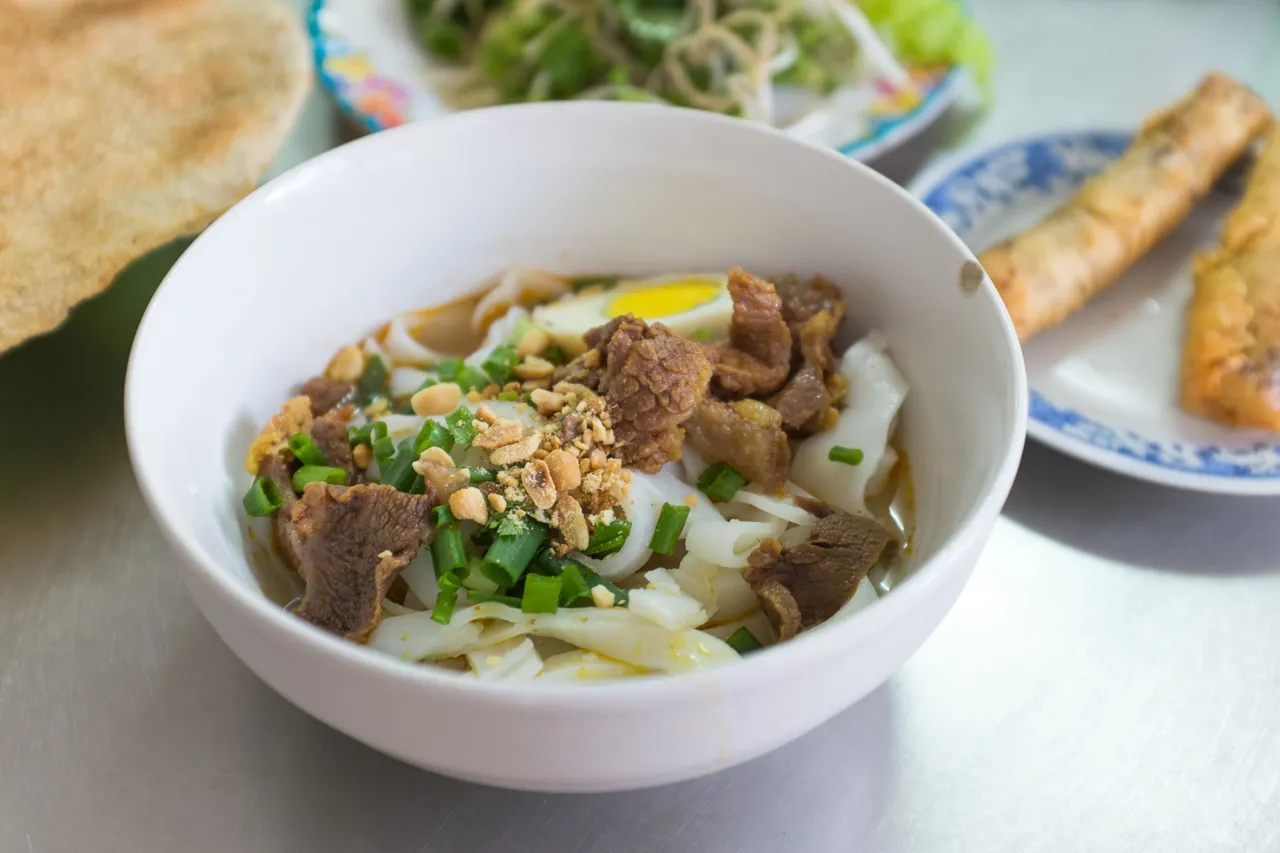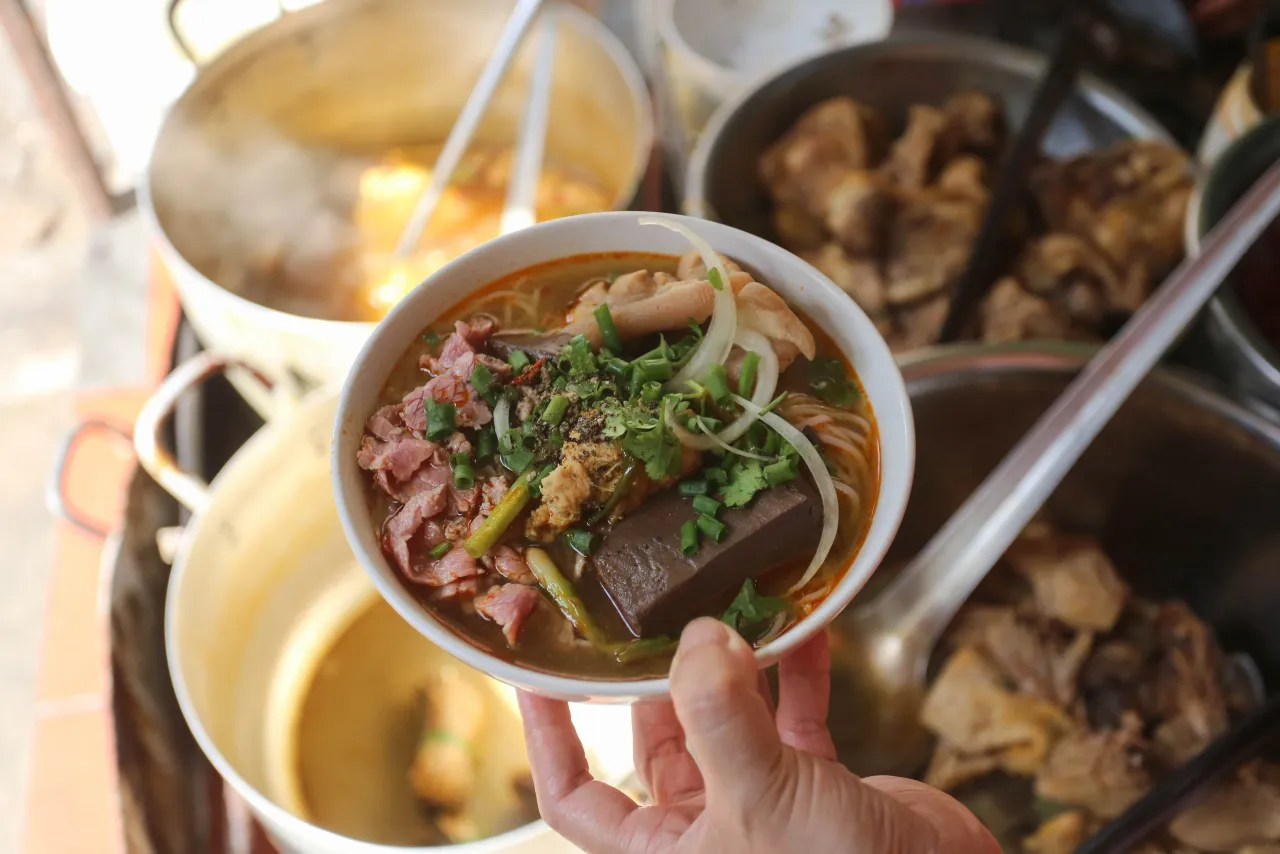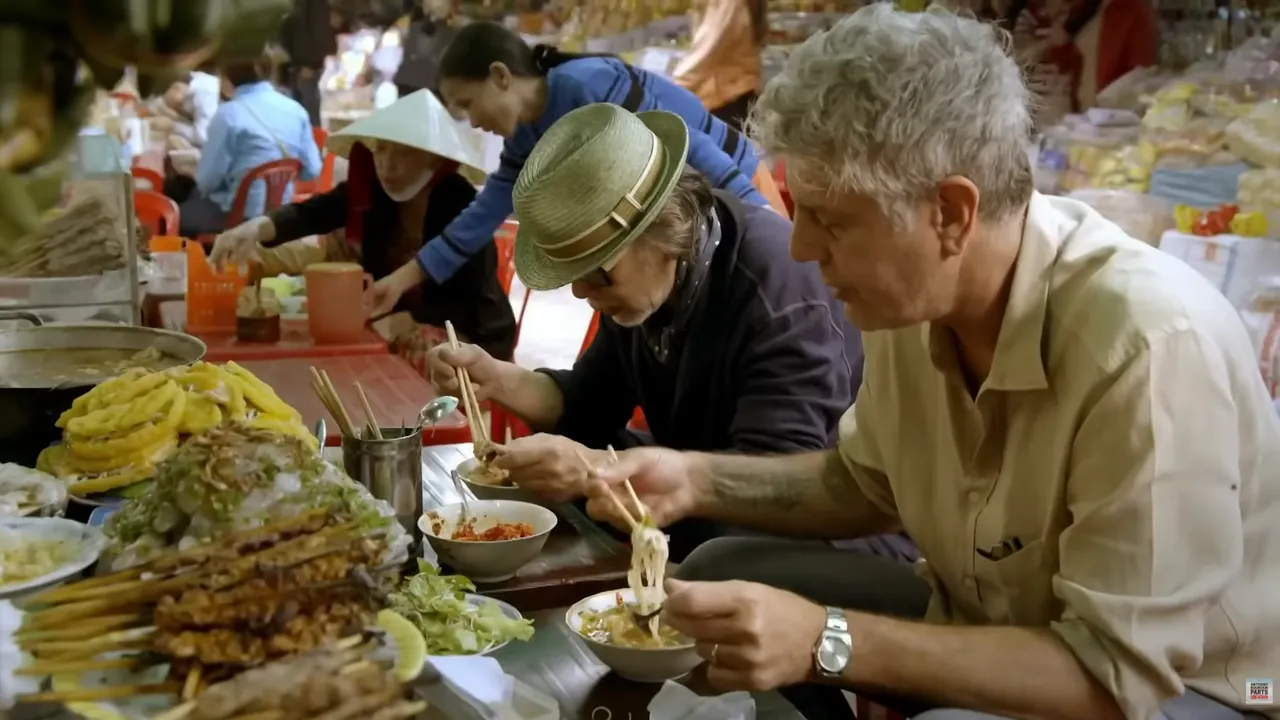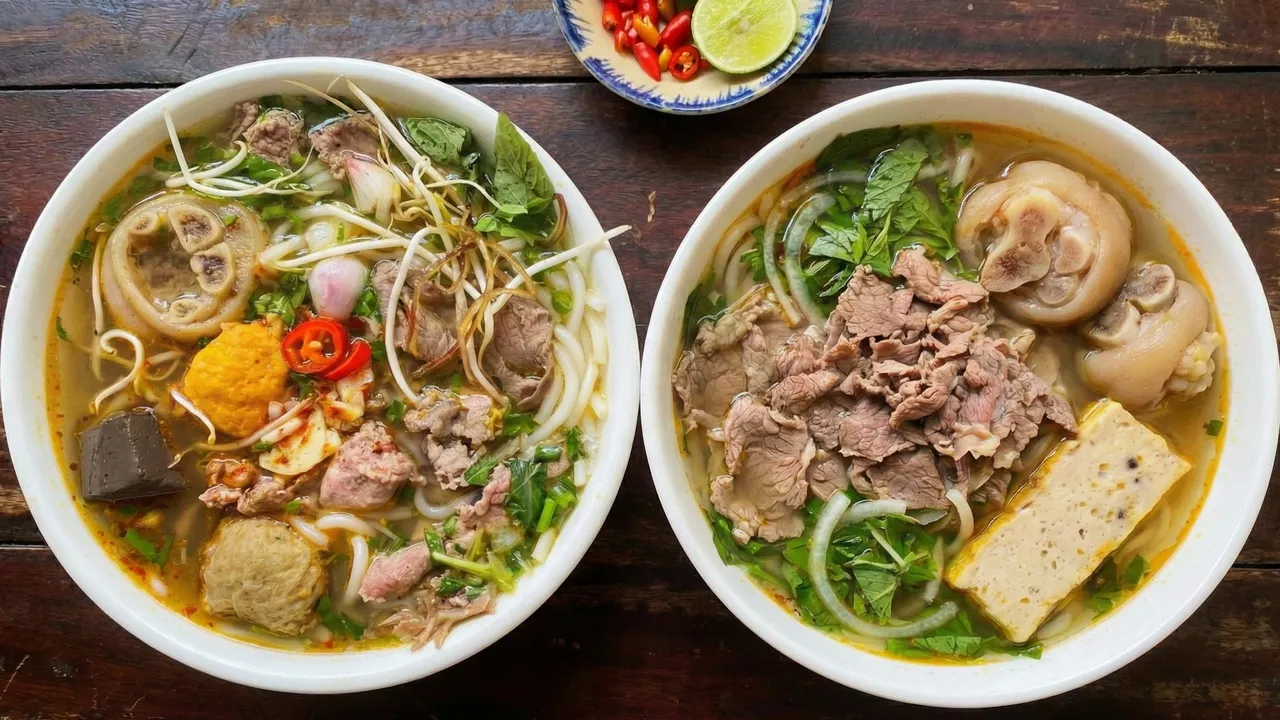
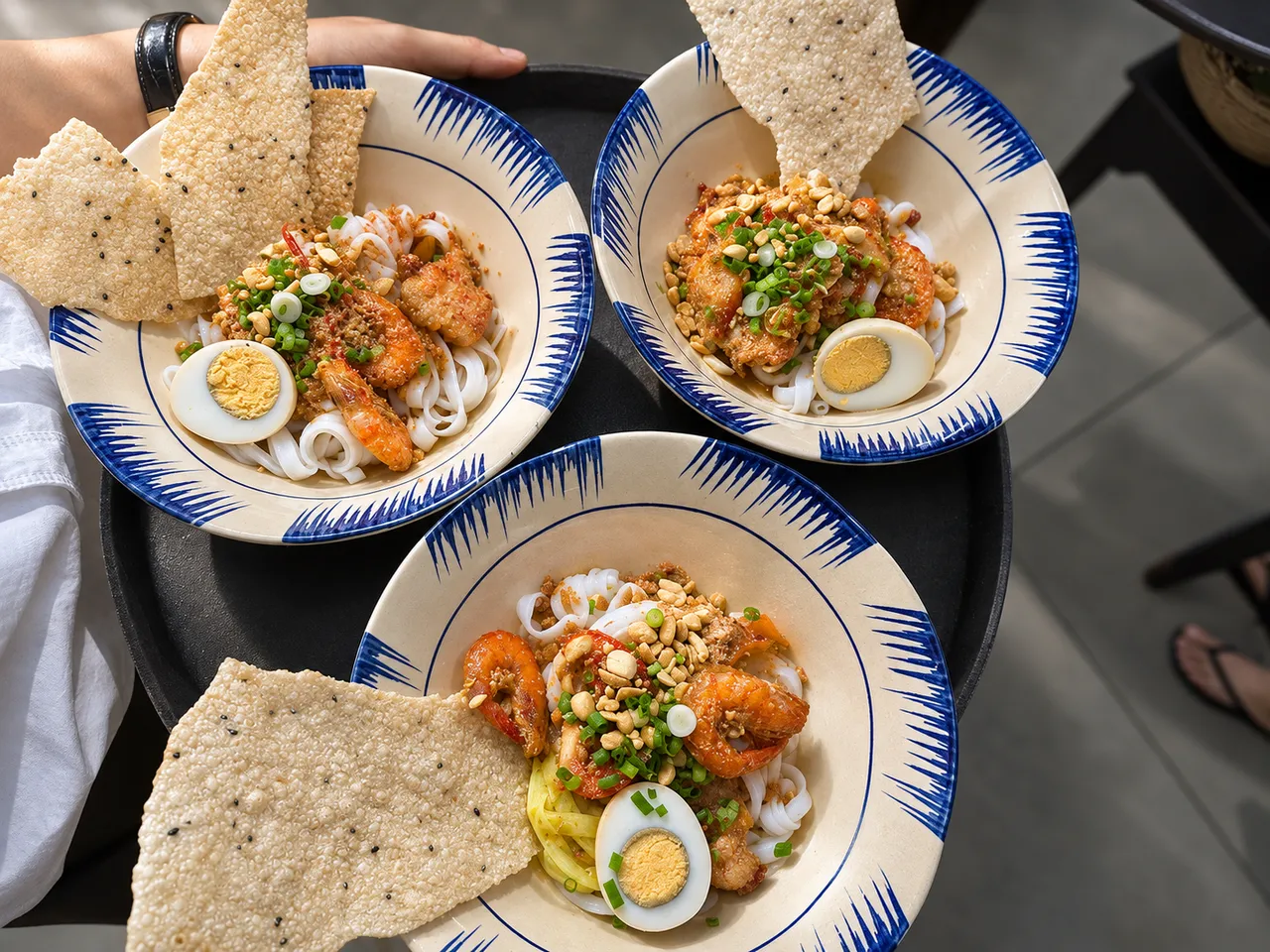
Pull up a low wooden stool at a neighborhood noodle stall at dawn and you will quickly discover that eating mì Quảng in central Vietnam is an introduction to a candid, big-hearted local character. Across historic Quang Nam and Da Nang, reunited since July 2025 within the expanded boundaries of Da Nang city, morning tables hum with lively conversation and warm hospitality.
In Episode 4, pour a cup of hot ginger green tea and join Bánh Mì Xin Chào as we explore the temperament, books, and cultural perspectives surrounding this homeland bowl.
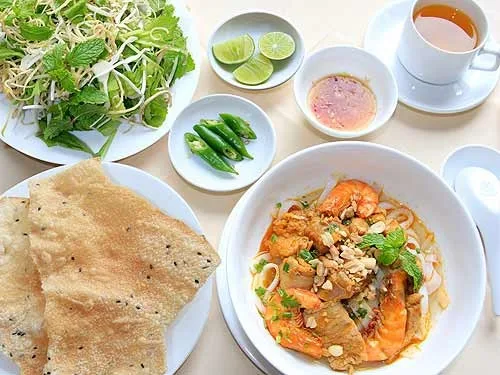
The spirited "Quang Nam loves a debate" character over morning noodles
Why does a simple morning noodle stall reveal so much about central Vietnamese character? Because neighborhood noodle shops are community gathering places where the day begins with spirited conversation.
In Part 3 of his Philosophy of Mi Quang series in Da Nang Newspaper, the late writer Vu Duc Sao Bien recorded four humorous real-life debates he witnessed inside local noodle shops [3]:
- A husband and wife debating human curiosity over their morning bowls.
- Two young women arguing spiritedly over whether Ky Ly junction has three roads or four.
- The author himself joining a debate over prized fighting roosters from Thang Binh.
- A neighboring diner arguing with the shop owner about soft-shell crabs from Nui Thanh used in the sauce.
At first glance such exchanges sound argumentative, yet they reflect an honest desire to get to the bottom of things. Central Vietnamese locals speak their minds plainly and never hold a grudge.
Beneath that direct, unpolished exterior beats a generous heart captured in a famous folk couplet:
Quang Nam soil absorbs the rain before the shower even falls,
Hong Dao wine warms the heart before the cup even touches the lips.
As the bowl empties, Vu Duc Sao Bien advised finishing the meal with a cup of hot green tea steeped with fresh ginger slices. The warmth of ginger and brisk green tea settles the stomach and leaves diners ready for the day ahead [3].
Why every native far from home keeps a personal standard of mì Quảng in memory
That candid village warmth has inspired both monumental scholarship and beloved everyday literature. Readers curious about the region's historical depth can explore Da Nang Newspaper's feature on the Quang Nam - Da Nang Gazetteer (Dia chi Quang Nam - Da Nang), co-edited by scholars Thach Phuong and Nguyen Dinh An. Compiled over more than twelve years across nearly 1,850 pages, the work chronicles seven centuries of local geography, history, and community life [4].
In everyday literature, the aroma of mì Quảng comes alive in the essays of bestselling author Nguyen Nhat Anh, born in Do Do village (formerly Binh Que commune in Thang Binh district, now part of Da Nang city). A profile in Thanh Nien Newspaper celebrating Hometown Mist and Smoke (Suong khoi que nha) and Quang People Going Out for Mi Quang (Nguoi Quang di an mi Quang) shows how childhood memories of Do Do village remain inseparable from rustic dishes and family noodle pots [5].
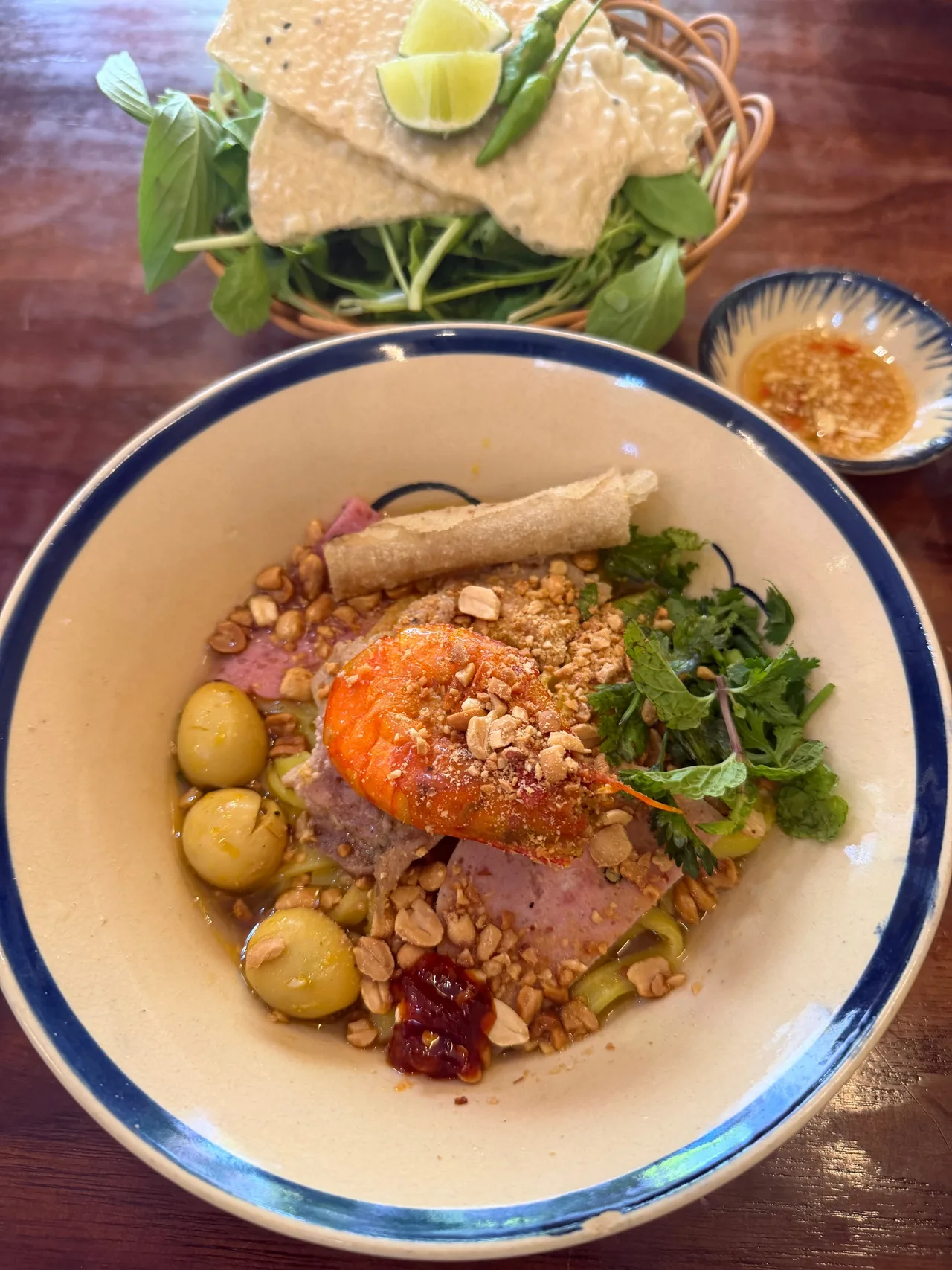
Reviewing Nguyen Nhat Anh's essay in Dau an Quang, Da Nang Newspaper highlighted his observation that no single "official" recipe for mì Quảng can ever be crowned. From noodle thickness and nuoc nhun sauce to the basket of greens, everyone defends the familiar taste of their own village. More than a meal, the bowl becomes an anchor of memory for those living far from home [6].
That lifelong longing was shared by many of Quang land's most celebrated literary figures. A 2016 feature by writer Ha Nguyen in Viet Nam News recalled how the late wandering poet Bui Giang dreamed of enjoying a hometown bowl of mì Quảng before passing away, while the late scholar and writer Nguyen Van Xuan cherished the simple joy of eating mì Quảng under the cool bamboo shade of his native village [9].
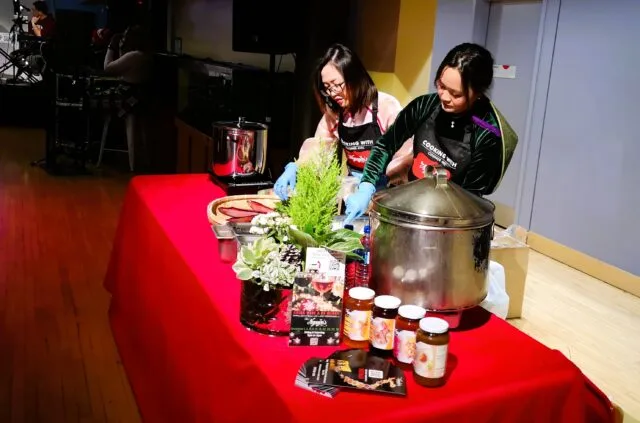
Across the ocean, that same family memory has warmed even a snowy Canadian winter. In December 2023, veteran Canadian food journalist and CBC Radio Kitchener-Waterloo food columnist Andrew Coppolino documented a moving story during CBC's annual Sounds of the Season charity fundraiser supporting the Food Bank of Waterloo Region in Ontario [10]. There, Vietnamese-Canadian chef Annie Nguyen, who began cooking at age five and runs a family restaurant in Guelph, ladled out bowls of homestyle chicken mì Quảng for the community drive and reflected: "The soup has a long story. It started with my grandmother, my mom and my auntie back home. And now, I am continuing the tradition" [10].
An intriguing cultural perspective behind "Mì", "Mỳ", and the endearing term "con mỳ"
Deep affection for the homeland bowl even sparks lively reflection over a single letter: whether to write "mì" with a short i or "mỳ" with a long y. From a modern orthographic standpoint, a linguistic analysis in Tuoi Tre Newspaper cited Ministry of Education and Training Decision 1989/QD-BGDDT of 2018, which favors the short i in school textbooks when pronunciation is unchanged, while noting that textbook rules do not bind every sphere of cultural life [1]. Writers and journalists such as Le Minh Quoc and Ly Doi likewise use the standard dictionary spelling "mì" [8].
Walk through Tam Ky, Hoi An, Ai Nghia, Dien Ban, and Duy Xuyen to Con Market and Han Market in Da Nang, however, and most shop signs still read "Mỳ Quảng" with a long y. Highlighted alongside cultural writer Le Minh Duong's piece in Van Hoa Newspaper, essayist Tieu Vu explained this deliberate local choice [7] [8]:
People in Quang land never confuse "mì" and "mỳ". They still write bánh mì, instant mì tôm, Italian mì Ý, and spicy mì cay correctly. Only for Mỳ Quảng do many keep the long y. That shows it is not a mistake, but a conscious way of naming tied to the dish's own identity [8].
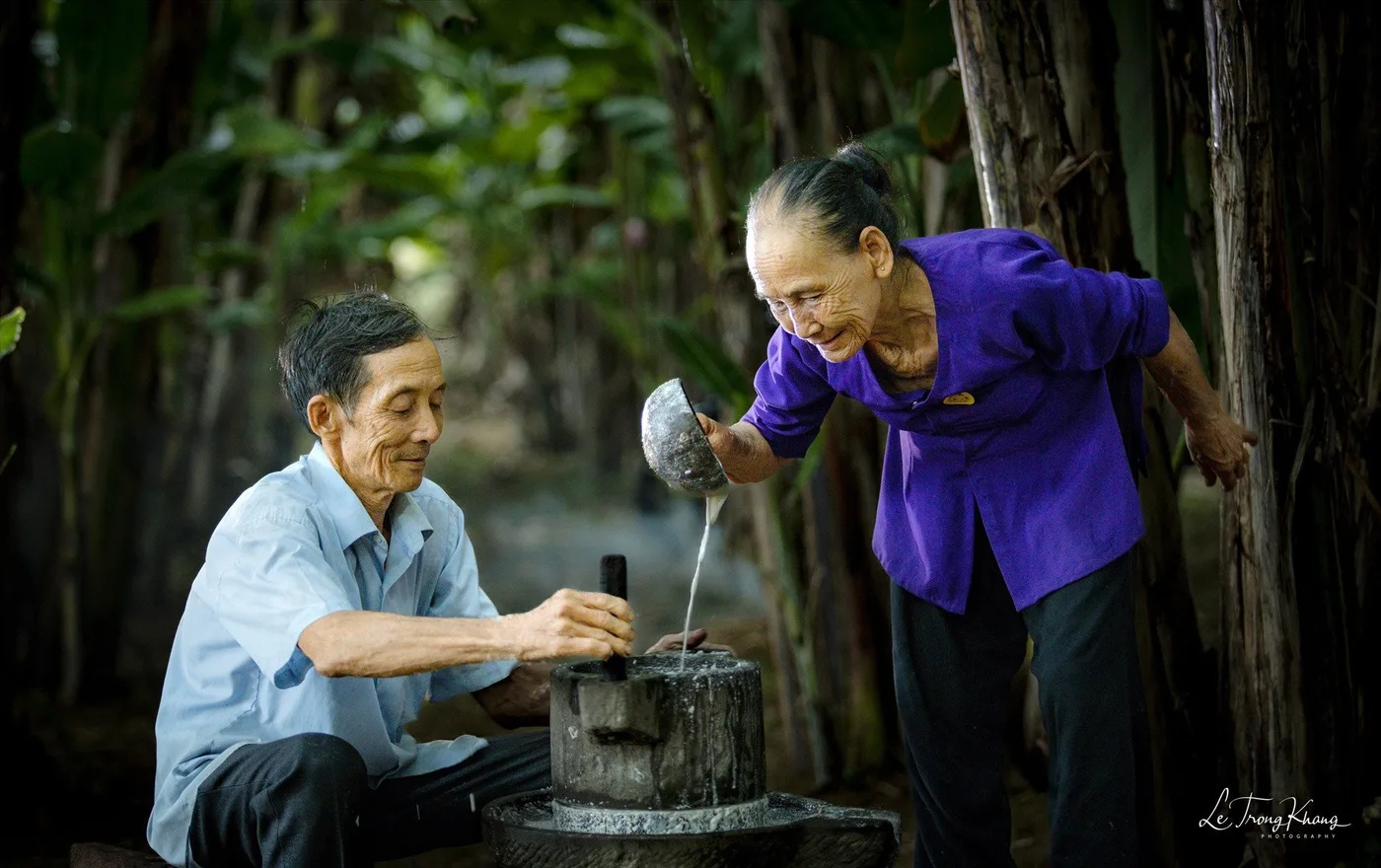
Citing Assoc. Prof. Dr. Luu Trang in Van Hoa Newspaper, Le Minh Duong explained that because the noodle is crafted from native paddy rice rather than imported western wheat flour, the community treats "Mỳ Quảng" almost like a proper noun. Locals even call each noodle ribbon con mỳ, using the animate Vietnamese classifier con (as in con nuoc for a river current or con tim for the human heart) as if breathing life into a rice-flour strand that accompanies every ancestral feast, house-raising, and family reunion [7].
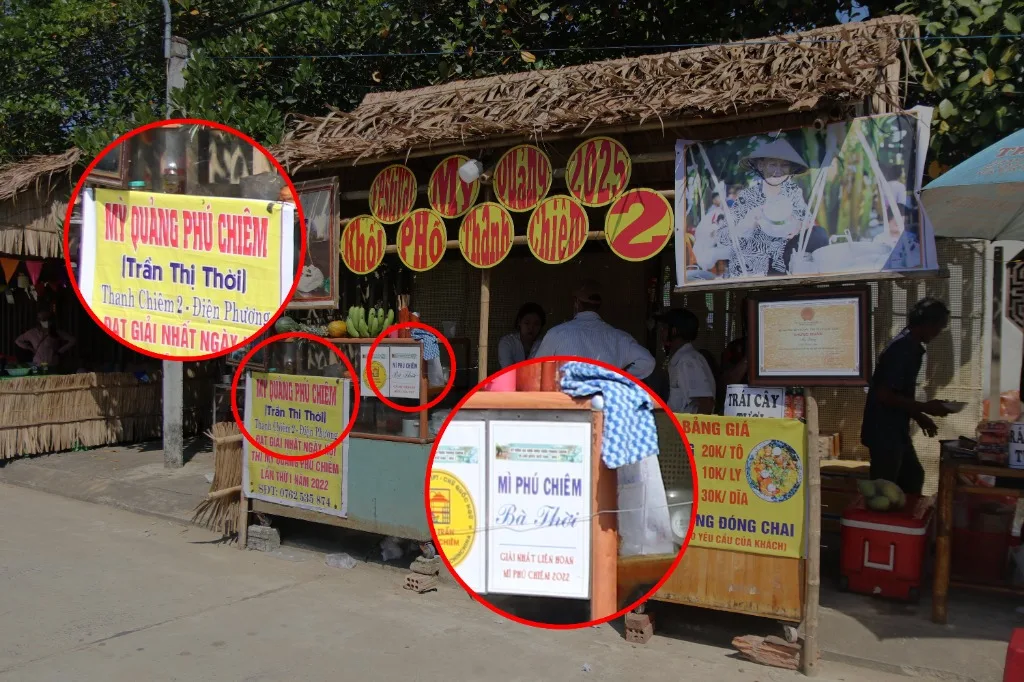
Stepping back to look at the bigger picture, the conversation between the short i and the long y is never really about deciding who is right or wrong; it is a gentle meeting between hometown memory and contemporary life. At artisan Tran Thi Thoi's hometown stall (Thanh Chiem 2 neighborhood, Dien Ban), the banner reading "Mỳ Quảng Phú Chiêm" stands beside the sign reading "Mì Phú Chiêm" in quiet, unforced harmony [11]. In the 2024 National Intangible Cultural Heritage inscription and across weathered shopfronts in the old town, "Mỳ" remains as a warm note of nostalgia [2] [8], while in modern dictionaries and everyday journalism, "Mì" serves as a clear, shared standard for the wider public.
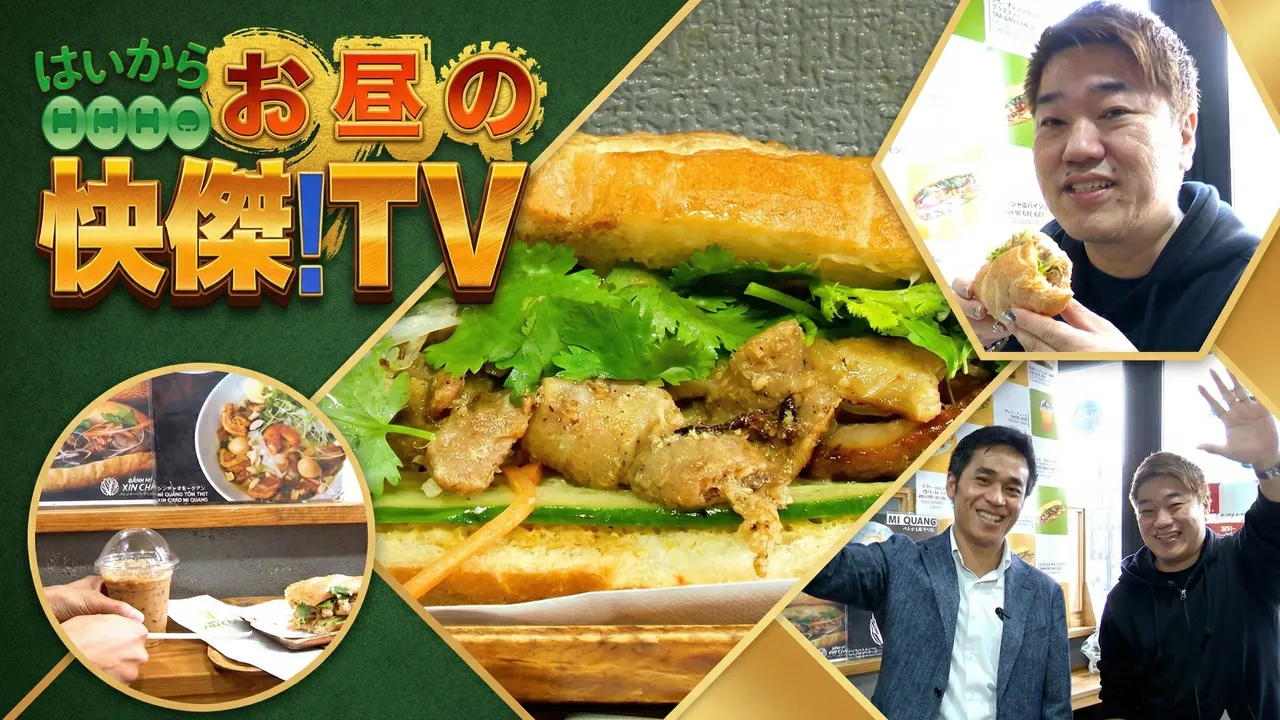
Standing between those two currents as we bring our homeland bowl to tables in Japan, Bánh Mì Xin Chào chooses the unified spelling "Mì Quảng". It is a choice made in the spirit of openness and integration: a clean, consistent spelling so that as the dish travels beyond its village bamboo groves to international guests learning their first Vietnamese words, it carries a name that is easy to recognize and remember. Yet behind that neat lettering on our menu, we hold deep affection for the nostalgic "Mỳ" of home and the tender village phrase con mỳ passed down by our elders. For Bánh Mì Xin Chào, placing a dish on our menu is never just about serving a satisfying meal; it is an invitation to share the many cultural perspectives and human stories that give the bowl its soul. When this dish travels abroad, how do Western travelers and Japanese diners experience it? Join us in Episode 5 to see mì Quảng through global eyes.
References
- Hoàng Dũng (2019, April 14). Quy Nhơn hay Qui Nhơn?. Tuổi Trẻ Online.https://tuoitre.vn/phunuonline/quy-nhon-hay-qui-nhon-1101416785.htm
- VietnamPlus (2024, August 12). Mỳ Quảng được công nhận là Di sản Văn hóa Phi vật thể Quốc gia. VietnamPlus (TTXVN).https://www.vietnamplus.vn/my-quang-duoc-cong-nhan-la-di-san-van-hoa-phi-vat-the-quoc-gia-post970227.vnp
- Vũ Đức Sao Biển (2013, April 14). Triết lý mì Quảng - Kỳ 3: Ăn mì Quảng, nghe chuyện Quảng. Báo Đà Nẵng.https://baodanang.vn/triet-ly-mi-quang-ky-3-an-mi-quang-nghe-chuyen-quang-3029429.html
- V.T. Lê (2010, September 25). Giới thiệu bộ "Địa chí Quảng Nam - Đà Nẵng". Báo Đà Nẵng.https://baodanang.vn/gioi-thieu-bo-dia-chi-quang-nam-da-nang-3227090.html
- Thanh Niên (2012, August 31). Có một nhà văn nhớ nhà. Báo Thanh Niên.https://thanhnien.vn/co-mot-nha-van-nho-nha-18555036.htm
- Hứa Xuyên Huỳnh (2013, April 20). Dấu ấn Quảng. Báo Đà Nẵng.https://baodanang.vn/dau-an-quang-3029841.html
- Lê Minh Dương (2025, June 5). Mỳ Quảng - Giữa ngôn từ và bản sắc. Báo Văn Hóa.https://baovanhoa.vn/my-quang-giua-ngon-tu-va-ban-sac-140640.html
- Tiểu Vũ (2026, March 23). Tại sao tôi viết "Mỳ Quảng" mà không viết "Mì Quảng"?. Tống Phước Hiệp / Nhìn Ra Bốn Phương.https://www.tongphuochiep.com/index.php/bao-chi/l-i-hay-y-d-p/42995-t-i-sao-toi-vi-t-my-qu-ng-ma-khong-vi-t-mi-qu-ng-ti-u-vu
- Hà Nguyễn (2016, September 13). Story of the famous Quảng noodle. Việt Nam News.https://vietnamnews.vn/life-style/342687/story-of-the-famous-quang-noodle.html
- Andrew Coppolino (2023, December 12). Mi Quang Ga soup: 'Sounds of the Season'. AndrewCoppolino.com.https://andrewcoppolino.com/blog/mi-quang-ga-soup-sounds-of-the-season/
- Nguyễn Cường (2025, June 7). Du khách trải nghiệm xay bột, tráng mì tại Festival Mỳ Quảng 2025. Báo Sài Gòn Giải Phóng.https://www.sggp.org.vn/du-khach-trai-nghiem-xay-bot-trang-mi-tai-festival-my-quang-2025-post798533.html