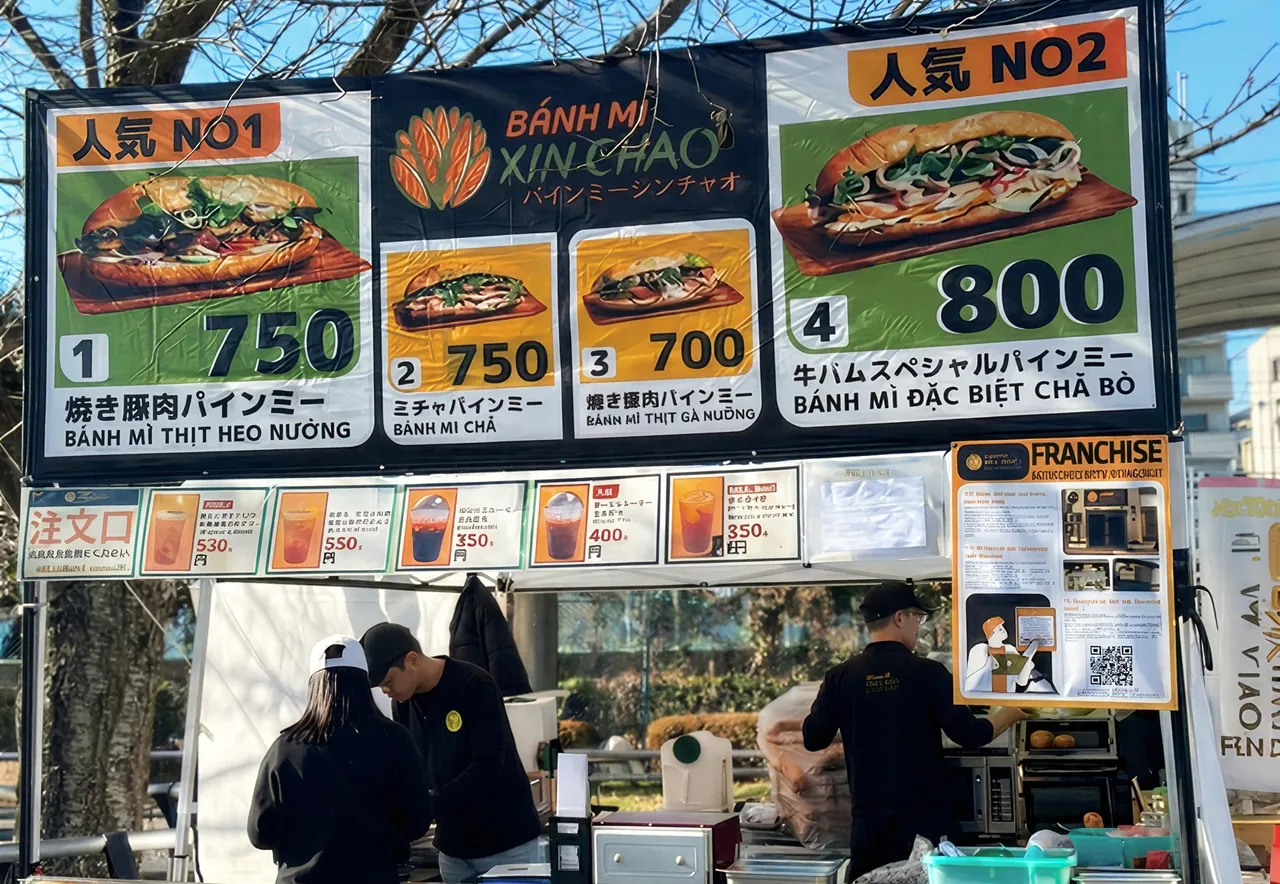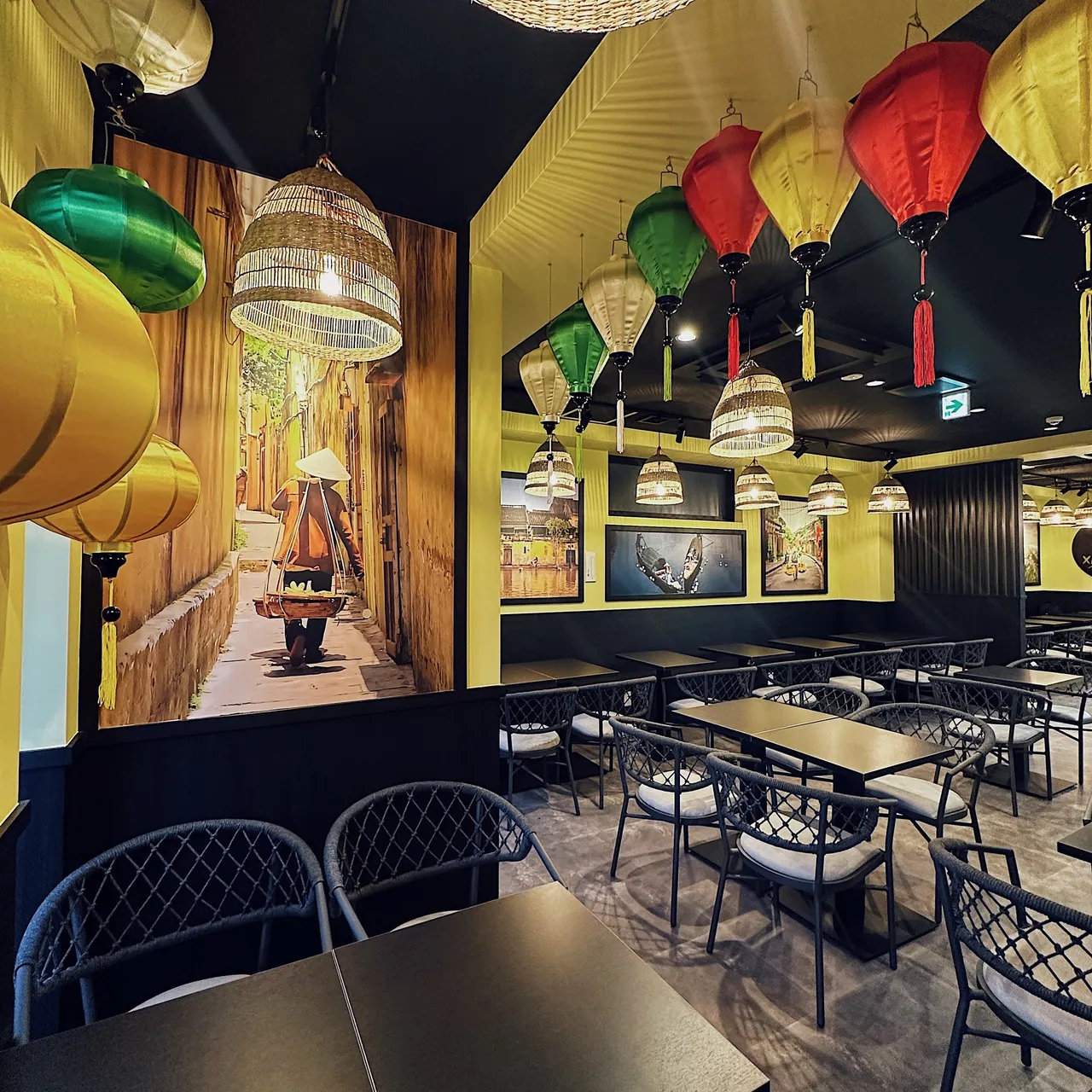
Opening an F&B store in Japan has never been easy, but doing so in shopping malls, large buildings, or train stations is a story of multiplied difficulty. First, how does a foreigner open an F&B store in Japan?
Establishing a company - applying for a business visa
First, you must be a legal resident with a "clean" record. Then, through law offices, you establish a legal entity and deposit a certain amount of money into a bank (usually from 5 million yen). This amount proves you have sufficient capital to open a company and apply for a business visa in Japan.
Unlike in Vietnam, where you can declare any amount of charter capital, in Japan, your company's charter capital is the actual amount you deposit into the bank, clearly printed in your passbook. Crucially, the origin of this money must be proven. If you haven't worked and can't prove the source of funds in Japan, it's best to have your family transfer money internationally directly from a Vietnamese bank to Japan. Never be frugal over a small exchange rate difference, or your visa application might "regret" it for you.
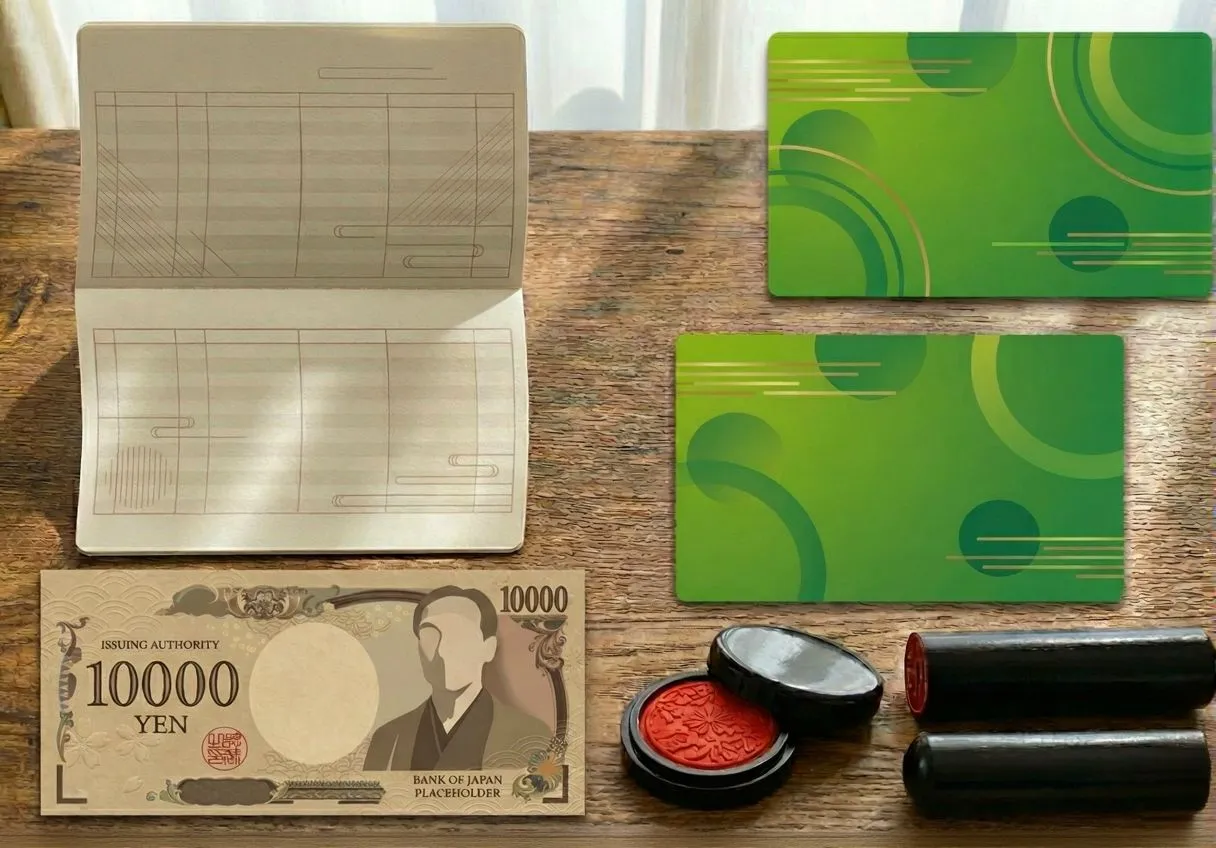
A company must have a registered office. Landlords usually don't allow you to use a residential address as an office, so you must find a place for your company office: it could be your rented storefront, a friend's house, or a virtual office to save costs.
Returning to renting a space, due to negative stereotypes about foreigners, renting has become more difficult. Plus, with a newly established company, we are often the last choice. Some places even require a Japanese joint guarantor.
A joint guarantor? It means if your company fails, the Japanese guarantor will bear the full consequences. Finding such a person is as hard as finding a romantic partner! This guarantor must also have a clean record, a stable job, and be thoroughly vetted by an insurance company.

Next is the housing story. In Japan, there's a fee called "key money" (reikin). Besides the deposit, you pay key money to thank the owner for renting to you, equivalent to 1 to 2 months' rent. The security deposit is typically 3-6 months' rent, sometimes up to 10 months, and 20-30% of it is non-refundable when you move out.
Furthermore, when you vacate the premises, you must clean it thoroughly and restore it to its original condition. The cost for this can be substantial, sometimes up to 2-3 million yen.
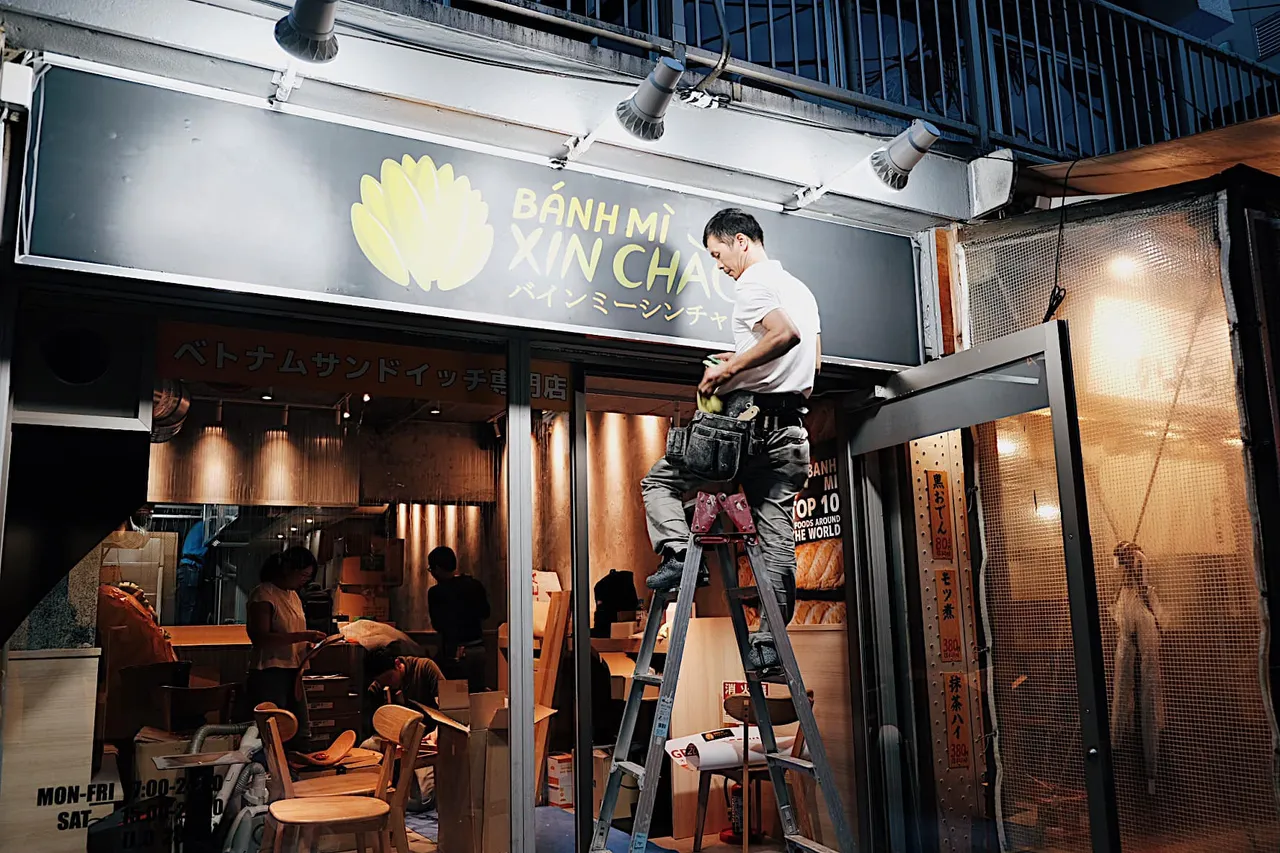
Roughly calculating, you need to spend about 9 months' rent (1 month key money, 6 months deposit, 1 month insurance, 1 month brokerage fee) before even starting your business. The first Banh Mi Xin Chao store in Takadanobaba, though only 20m², required a total of 14 months' rent upfront, plus a joint guarantor. Incredibly difficult!
All these factors lead to Vietnamese eateries often being in less-than-prime locations, with inadequate equipment, and facing operational issues due to budget constraints.
End of Part 1. Stay tuned for Part 2: The challenge of construction and execution